Tag: Bali

  • 410 kg of Trash: My River Clean-Up with Sungai Watch In Bali

    410 kg of Trash: My River Clean-Up with Sungai Watch In Bali

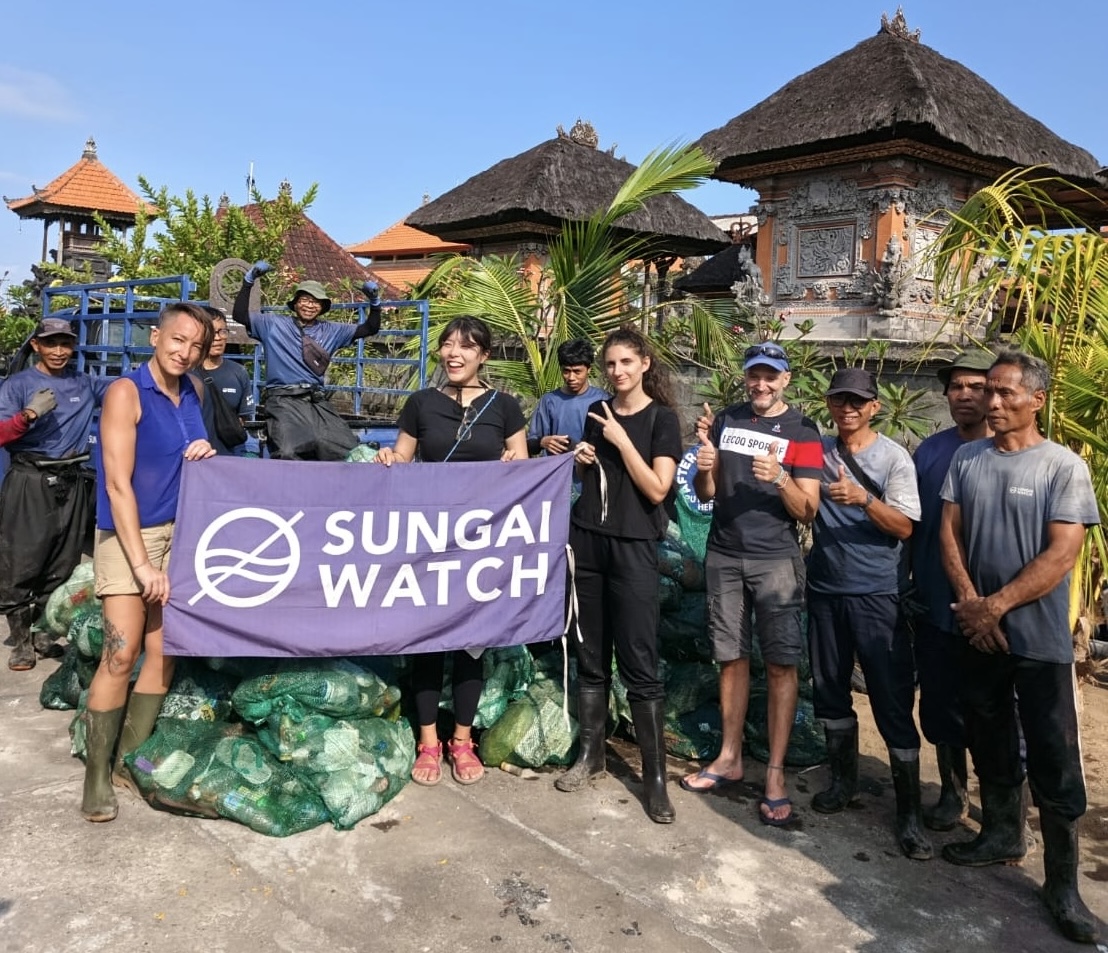
    I came across this NGO in my Lonely Planet: Sungai Watch. The organisation works to stop plastic and other waste from reaching Indonesia’s oceans by cleaning rivers, installing waste barriers, and involving local communities in the process. Volunteers can sign up for clean-ups at different locations, usually for around four hours. I decided to join one on a Friday morning.

    The meeting points are often shared as Google Maps coordinates, because the clean-ups take place far from Bali’s polished tourist scenery — often behind residential areas, along riverbanks, and near illegal dumping sites. Sungai Watch has run weekly volunteer clean-ups since 2022, alongside its river-barrier and waste-sorting work.

    I am staying near Keramas Beach on Bali’s east coast, not far from Casa De Brillo (= home). Here, the beach is all black sand and a powerful left reef break, with local surfers flying through the air. But the river we were cleaning that day eventually flows into the ocean. I was curious to see this less visible side of Bali and to learn more about the island’s waste-management challenges.

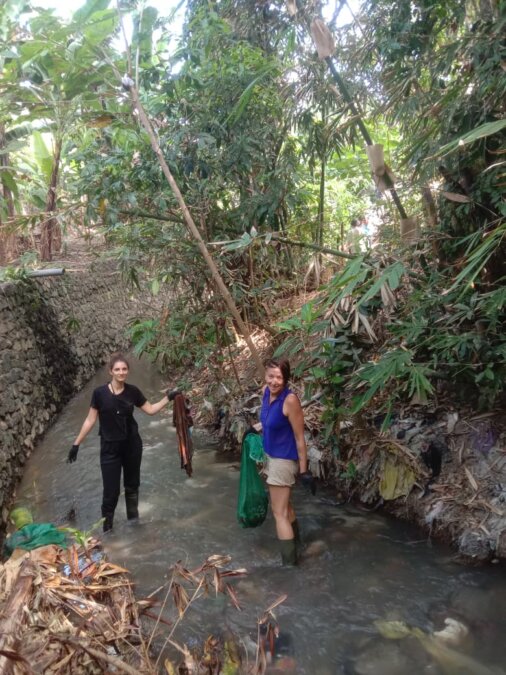
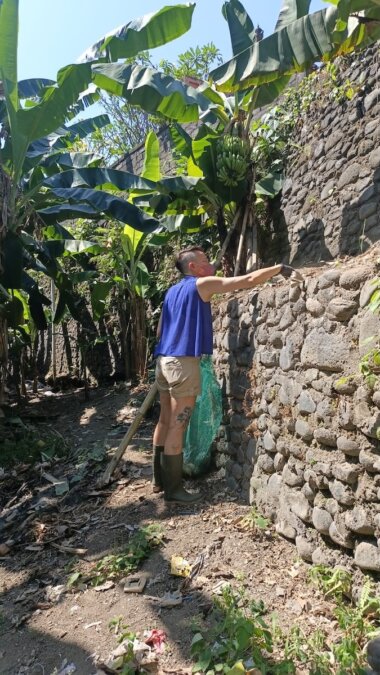
    Three other volunteers -from Italy, Japan, and France- and I joined the regular Sungai Watch crew behind a residential area. People had been throwing household waste into the river: bags of daily rubbish, clothes, mattresses, tiles, cement bags, and construction debris. Along the riverbank, we found burned waste and the remains of daily offerings, including sweet wrappers.

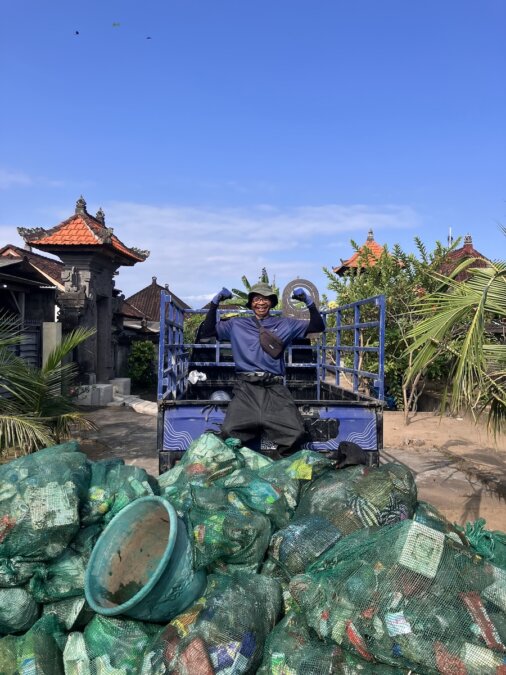
    By the time we arrived at around 8:00 a.m., the regular crew was already working. We continued until about noon, then weighed what we had collected: 410 kg of rubbish.

    The number was shocking, but what stayed with me was how little visual difference four hours of work made. The crew returns every Friday, yet waste continues to appear in the river faster than it can be removed. One clean-up cannot solve a problem that begins upstream, at household level, and within broader systems for collection, disposal, education, and enforcement.

    Bali does have policies aimed at reducing plastic waste, including a provincial regulation on single-use plastics, but implementation and enforcement remain uneven. Illegal dumping and open burning are continuing challenges, which means community-led clean-ups are essential, but they cannot replace reliable waste collection and long-term public education.

    Volunteering with Sungai Watch was dirty, physically demanding, and at times frustrating. Still, it was one of the most meaningful things I did in Bali. It made me look beyond the beaches, surf breaks, cafés, villas and perfect sceneries you can see on instagram.

    Four hundred and ten kilograms later, the river looked only slightly different. But I did not.
  • Finding Balance at Pura Taman Pecampuhan Sala – Water Purification Ceremony in Bangli

    Finding Balance at Pura Taman Pecampuhan Sala – Water Purification Ceremony in Bangli

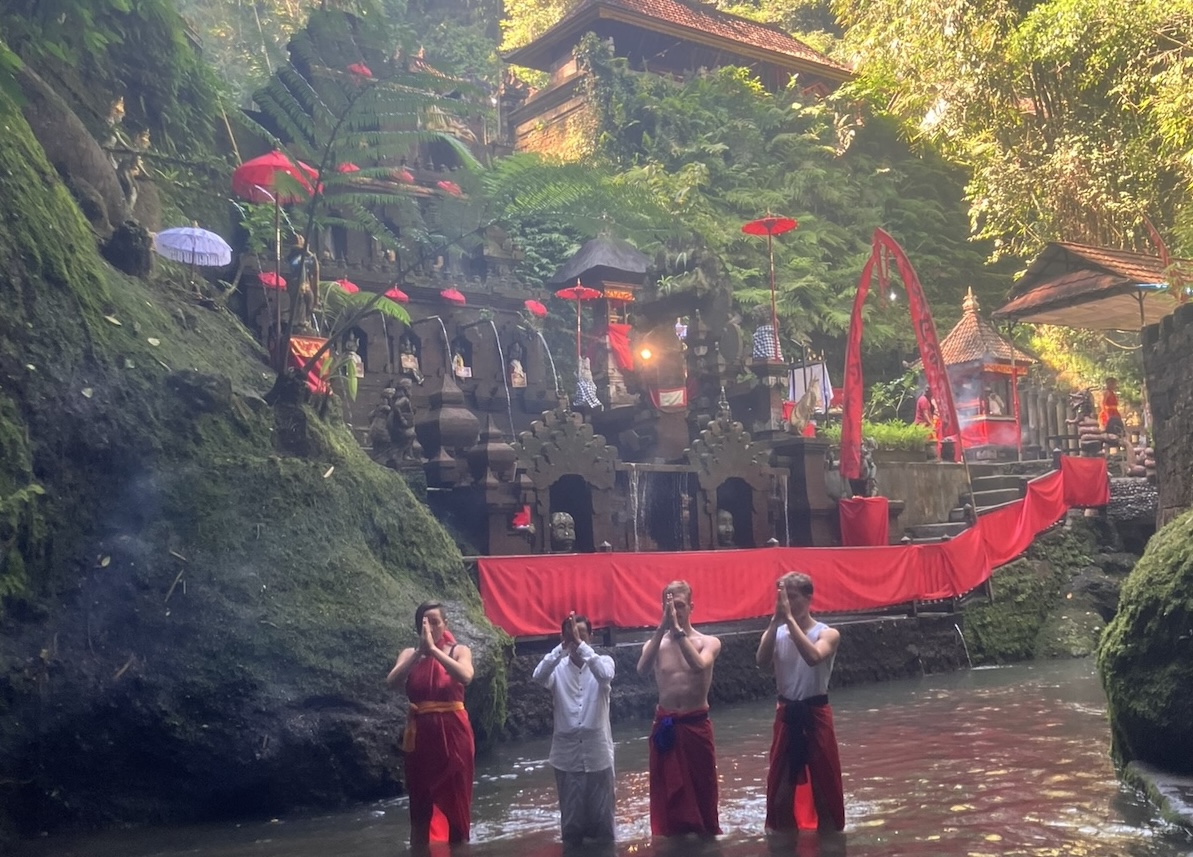
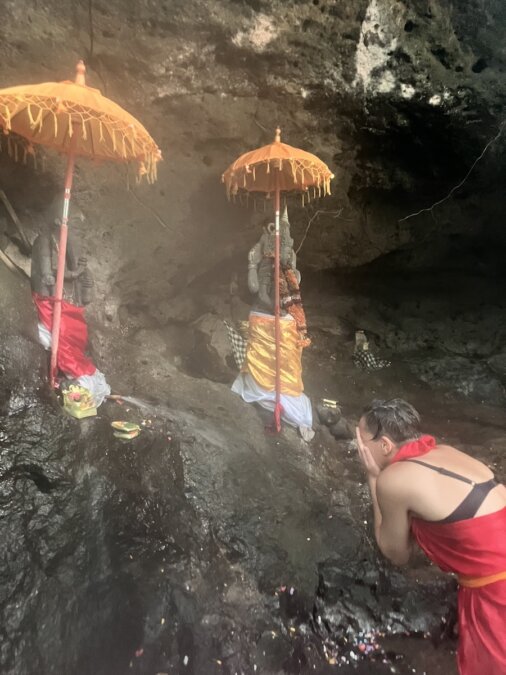
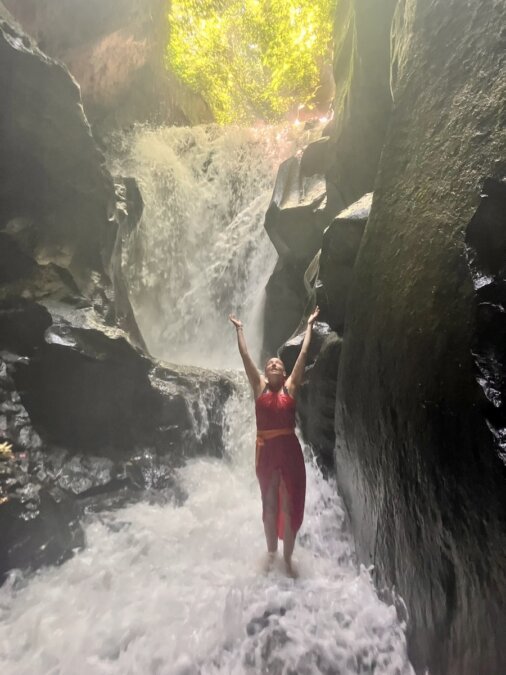
    A water purification ceremony is a spiritual cleansing ritual, recommended when you’re feeling stressed or exhausted — and at least every six months if you can. This week, ours took place at Pura Taman Pecampuhan Sala, a hidden jungle temple in Bangli where two rivers meet and nine sacred fountains feed the holy spring water.

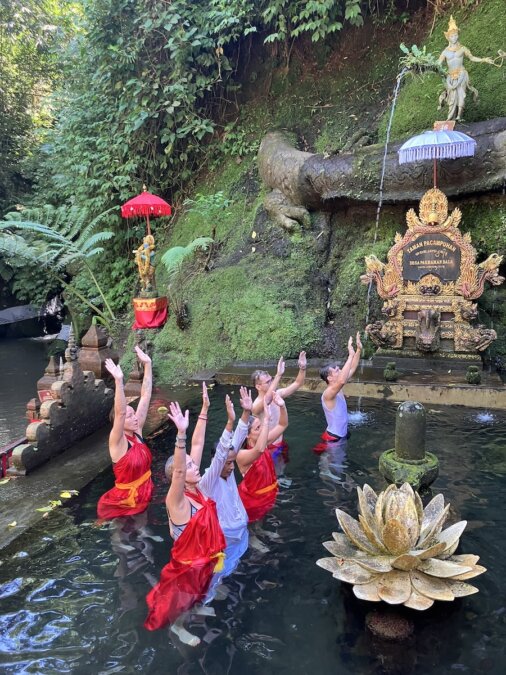
    Dr. Agung, head of Traditional Medicine at Bangli National Hospital, led our melukat ceremony with calm authority and deep respect for the tradition. We began with a few simple but important meditative basics: forming a lotus flower with our hands, the right hand leading as a constant reminder to do the “right thing” along with the gesture to cleanse your head, face and heart three times with water. Our group was small, sharing the purification site with a handful of tourists who had come to witness and join the ceremony.

    Together, we moved through around 21 offerings to the gods -greeting Mother Earth, praying to the god of the sky and to the spirit of the water where the two springs converge- while wandering through the holy spring water, letting it wash over us as if it were pulling away negative energy and restoring an inner balance I hadn’t realised I’d lost.

    In Balinese Hindu belief, the melukat ritual at Taman Pecampuhan Sala uses sacred water to cleanse body, mind, and spirit of negativity and spiritual heaviness. Standing under the flowing springs in this quiet ravine, I felt the weight of recent weeks soften, replaced by a quiet steadiness that stayed with me long after I changed out of my wet sarong.

  • Cremation Ceremony of a Member of the Royal Family – Ubud, Bali

    Cremation Ceremony of a Member of the Royal Family – Ubud, Bali

    Preparations for the cremation ceremony had already begun before I arrived in Ubud, Bali. Our “Feel Good Manager” from travel4med told me it was a rare public event to witness and not to be missed. The grand royal cremation ceremony -known locally as Pelebon– is held in honour of a deceased member of the Ubud royal family. It is a vibrant, deeply spiritual procession featuring a traditional multi‑tiered cremation tower.

    The different parts of the tower are spread out and built around Ubud’s main square, then carried on the shoulders of hundreds of men in traditional Balinese costumes. The colours of the cremation -purple and gold- feature prominently on two large pieces:

    • Bade (cremation tower): Represents the sacred Mount Meru and acts as a symbolic ladder connecting the human and the divine to transport the body.
    • Lembu (sarcophagus): Shaped like a sacred bull, it receives the body before it is purified through fire.

    I found a perfect viewing spot on the first floor of a restaurant opposite the cremation site and watched the procession. The Bade and Lembu sarcophagus were carried from the palace to the cremation grounds, continuously accompanied by Gamelan orchestras, drums, and cymbals.

    I eventually made my way down to the cremation grounds, where I bought my first sarong and settled into a shaded spot. From there, I joined other onlookers in witnessing the final preparations and the burning of the sarcophagus.