Category: Volunteering

  • Bringing hope and healing aboard Africa Mercy

    Bringing hope and healing aboard Africa Mercy

    Serving Through Mercy Ships

    I’m volunteer as a ward nurse (pediatric ICU) caring for patients after maxillofacial surgery on the Africa Mercy in Madagascar. For me, nursing is more than a job – as colleagues at Charité would joke, I’m not in it for the money. It’s a calling to stand with children and families when they need hope, care, and a chance to heal. I’ll be offering my time, skills, and heart to provide follow-up care and nursing support where local resources are limited.

    Mission from 12 July 2026 to 12 September 2026 (preliminary end date)

    What Mercy Ships Does

    Mercy Ships partners with host countries to bring free, life-changing surgeries, dental care, and medical training to people who would otherwise have little or no access to safe healthcare. In Madagascar, the Africa Mercy is serving patients in Toamasina, with thousands of free surgeries and dental procedures planned, alongside training for local healthcare professionals to strengthen long-term surgical and nursing care. As a pediatric nurse, I’m honored to be part of a mission that combines immediate healing with long-term impact.

    How You Can Help

    I’m asking for your help to cover my volunteer expenses. Any contribution helps. To give you an idea of what donations can cover, here are some of my costs:

    • TB skin test: 20 US$
    • Diphtheria and tetanus vaccine: 28 US$
    • Malaria prophylaxis medication, required from 2 days before travel to Africa until 4 weeks after departure: 170 Malaysian Ringgit
    • New set of appropriate clothing, since I’ll be setting aside my “bikini kinda live” style for the next two months: 300 Malaysian Ringgit, 28US$
    • Entry visa: 35 US$
    • Monthly expenses for recreation
    • Expenses during time off

    My application process started at the end of last year, and my first assignment could have begun in March 2026. However, progress in my Australian and New Zealand registration process allowed me to postpone my mission. That is why the costs are listed in different currencies, since I was preparing for service while in Cambodia and Malaysia.

    Donate by Bank Transfer

    Any donation goes to Mercy Ships:

    SozialBank

    IBAN: DE85 6012 0500 6000 7000 80
    BIC: BFSWDE33STG

    Purpose of Bank Transfer: Sarah Degethof 7775 + your address

    Your address is required so Mercy Ships can create a donation receipt, allowing you to deduct the donated amount from your taxes.

    Love, Sarah Simone
  • My Nursing Internship in Bali: Hemodialysis, Pulmonology and Traditional Medicine

    My Nursing Internship in Bali: Hemodialysis, Pulmonology and Traditional Medicine

    My nursing internship in Bali took place at the national hospital in Bangli. Dr. Agung, the head of the international medical student programme, also led the Traditional Medicine Department and the weekly water-purification ceremonies.

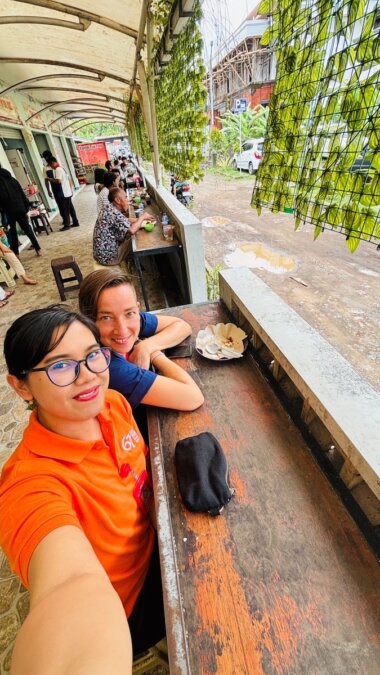
    Sarah Simone and Agung Ayu at the restaurant of national hospital Bangli

    At his side was the smiling and cheerful Agung Ayu. She welcomed us to the hospital each morning and made sure we found our way to our assigned departments.

    Choosing my hospital departments

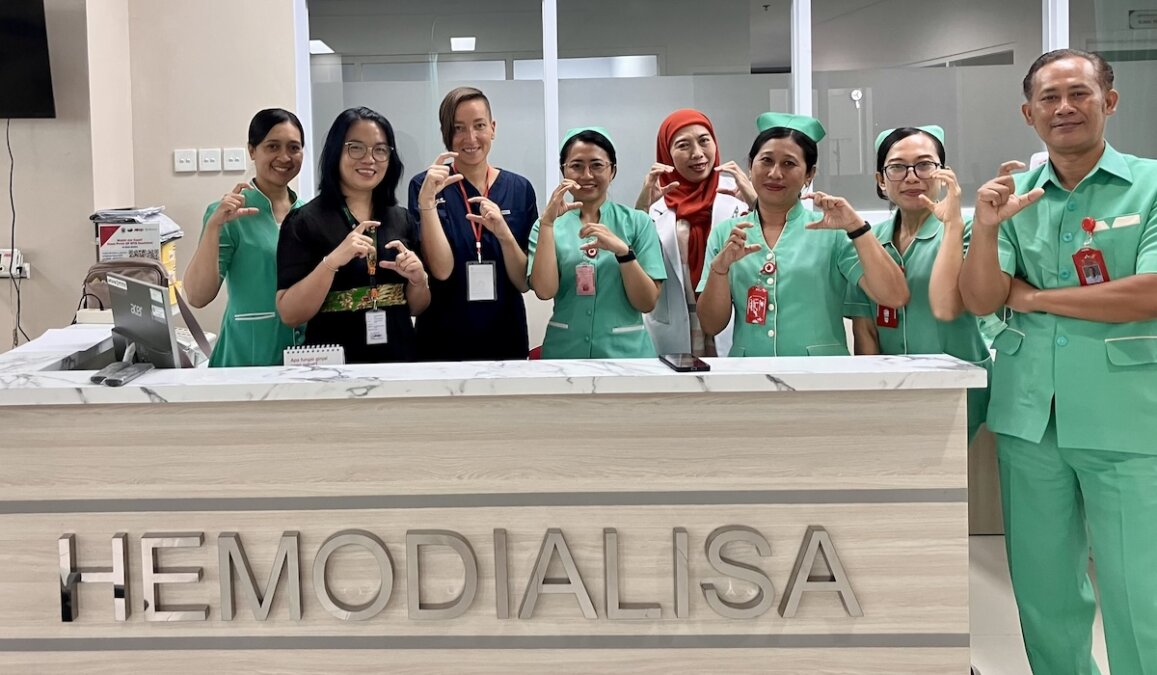
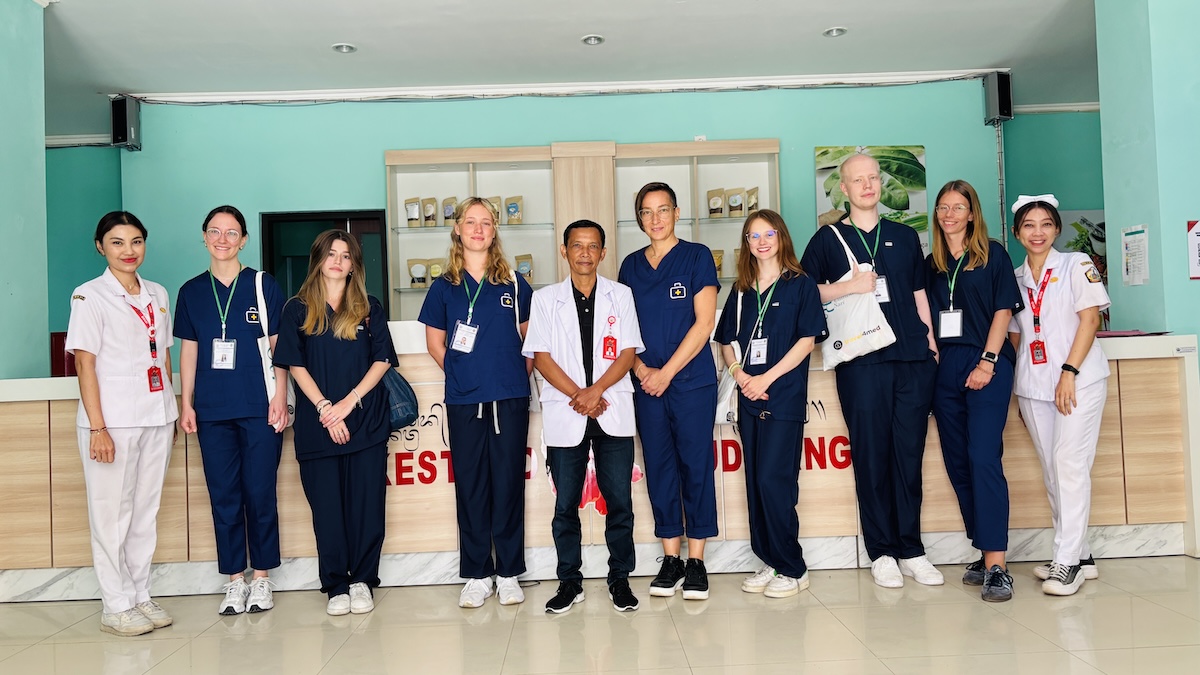
    Group picture with the team of the hemodialysis team at national hospital Bangli

    After observing surgery in Sri Lanka, I decided not to fight for a placement in the operating theatre. Instead, I chose to spend constructive time in the hemodialysis, Traditional Medicine and Pulmonology departments.

    The hemodialysis team was welcoming and knowledgeable. Not many of the staff spoke English, but we eventually found a way to communicate using a mixture of Balinese and Google Translate. The working day began at 7:30 a.m., with the first patients arriving at 8:00 for the first treatment round of the day. Five nurses prepared twelve dialysis stations while chatting and laughing at my attempts to ask questions in Balinese.

    Back at my home ward at Charité Universitätsmedizin, nurses had once been offered orientation rounds in the dialysis department as we treat many patients undergoing dialysis. However, as more nurses transferred there permanently, the orientation programme was discontinued. I therefore missed out on that training… I finally received it in Indonesia – and in Balinese, of all languages (laugh).

    As an international student, I was not allowed to set up a dialysis station or connect a patient to the machine. However, some patients knew a few English words and waved me over to their beds to converse with me and keep them company during their treatment. We talked about my home countries, places worth visiting in Bali and which foods I should try.

    Patients came for hemodialysis twice a week. They rotated between Monday to Friday appointments, with treatment sessions in the morning and afternoon. I gradually got to know some of them. Eventually, we ran into each other in the hospital restaurant and even during private excursions. I felt at home. I felt that I belonged.

    Learning in the Pulmonology Department

    Pulmonology was a teaching department. During morning lectures, local medical students presented common diseases through real patient cases, discussing diagnostic tests and treatment plans for each case.

    On other days, consultations took place with patients from the countryside surrounding Bangli. They arrived with a variety of respiratory complaints. These consultations were followed by hospital rounds, during which we mainly saw patients being treated for chronic obstructive pulmonary disease (COPD), often related to inhalation of smoke from fires, and pneumonia. The patient rooms were enormous because relatives gathered around their seriously ill family members to keep them company during their hospital stay. Many relatives had brought clothes and food to support the entire family.

    Behind the Pulmonology Department was an isolated tuberculosis ward with a separate entrance at the back of the building. There were no patients with active tuberculosis at the time, although five tuberculosis cases were being observed and followed up in Bangli. The ward was open to the outside and did not have negative-pressure rooms. Two rooms separated the patients from the rest of the hospital. Personal protective equipment mainly consisted of N95 masks, and patients were provided with a basic PPE kit.

    A spiritual experience in Traditional Medicine

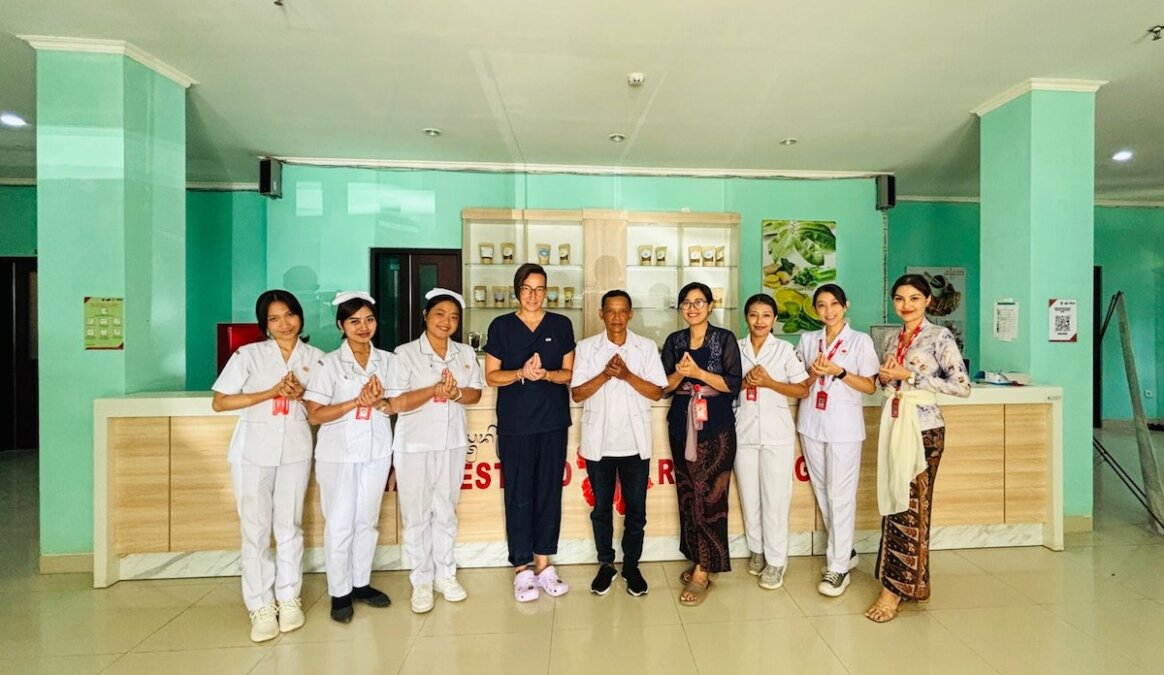
    Group picture with Dr. Agung and the team of the traditional medicine department and national hospital Bangli

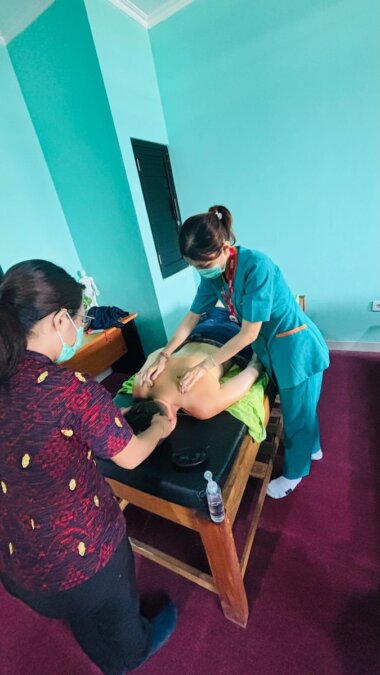
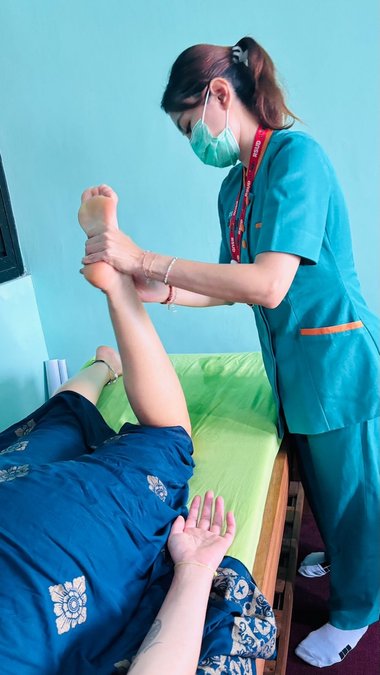
    Traditional Medicine, led by Dr. Agung, was a spiritual place. One side of the department focused on acupressure and meditation, while the other offered wellness treatments.

    The building was filled with the fragrance of frangipani, which was burned throughout the day as part of offerings and meditation rituals. In some areas, the sounds of the rainforest and birds singing in the trees filled the rooms. My days included meditations, such as one for opening the heart, led by Dr. Agung. He chanted, hummed and played the conch shell. The meditation was followed by an acupressure treatment or a facial wellness treatment.

    If I believed in heaven, this is what I would imagine it to be like.

    I learned about the different chakras and their influence on, and connection to, our spirits and the gods. Dr. Agung enjoyed teaching me because he thought I was an atheist and considered me very receptive to his teachings and meditation rituals. Well, I had the best power naps of my life during my final week in Traditional Medicine.

    I felt very good about myself. I felt calm, inside and out. And I still do.

  • 410 kg of Trash: My River Clean-Up with Sungai Watch In Bali

    410 kg of Trash: My River Clean-Up with Sungai Watch In Bali

    I came across this NGO in my Lonely Planet: Sungai Watch. The organisation works to stop plastic and other waste from reaching Indonesia’s oceans by cleaning rivers, installing waste barriers, and involving local communities in the process. Volunteers can sign up for clean-ups at different locations, usually for around four hours. I decided to join one on a Friday morning.

    The meeting points are often shared as Google Maps coordinates, because the clean-ups take place far from Bali’s polished tourist scenery — often behind residential areas, along riverbanks, and near illegal dumping sites. Sungai Watch has run weekly volunteer clean-ups since 2022, alongside its river-barrier and waste-sorting work.

    I am staying near Keramas Beach on Bali’s east coast, not far from Casa De Brillo (= home). Here, the beach is all black sand and a powerful left reef break, with local surfers flying through the air. But the river we were cleaning that day eventually flows into the ocean. I was curious to see this less visible side of Bali and to learn more about the island’s waste-management challenges.

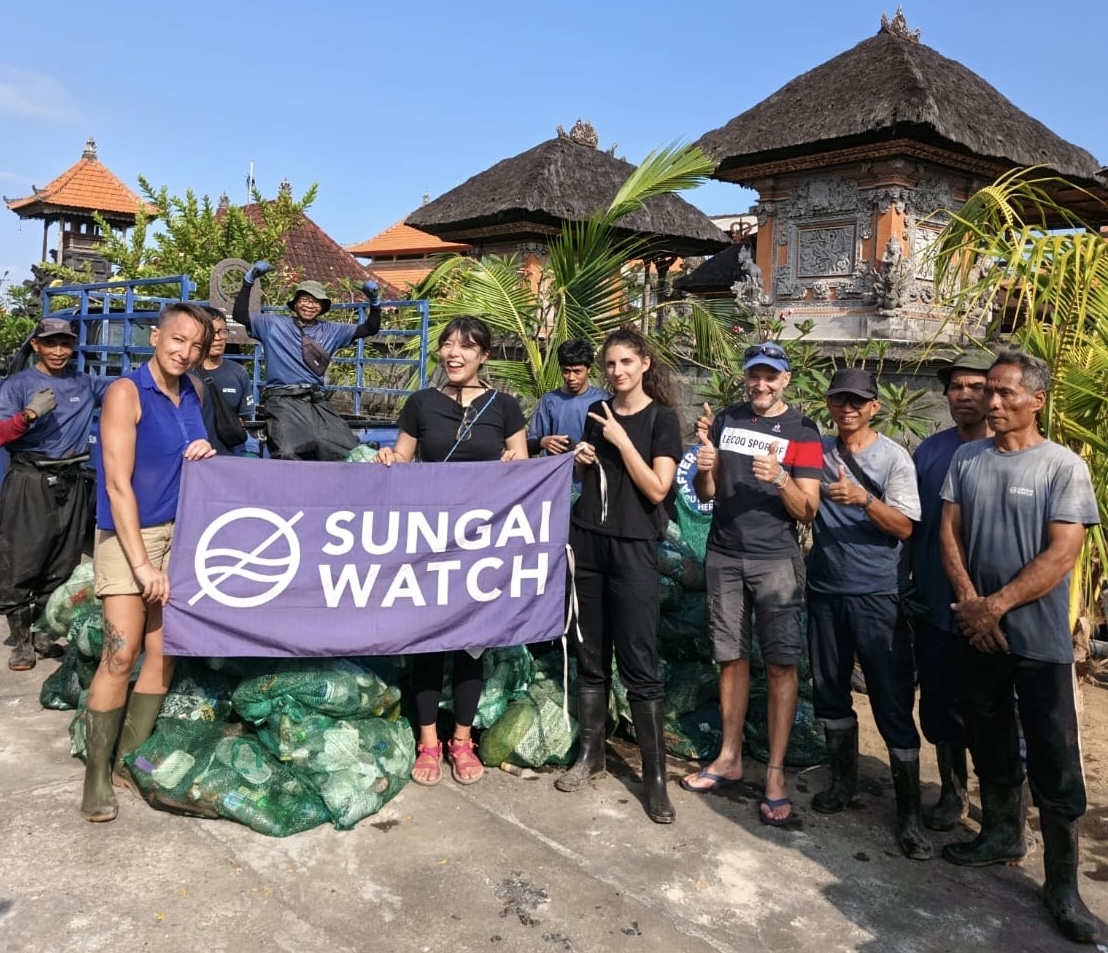
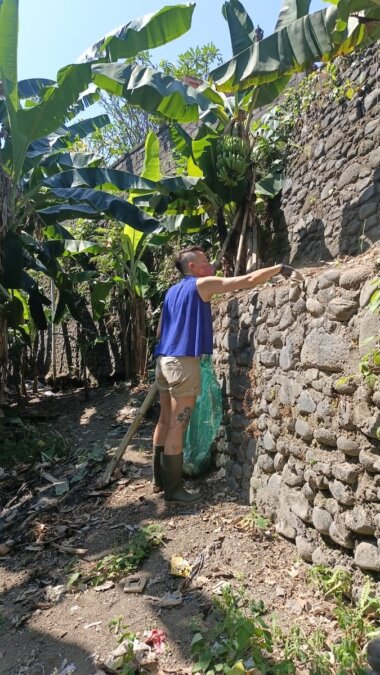
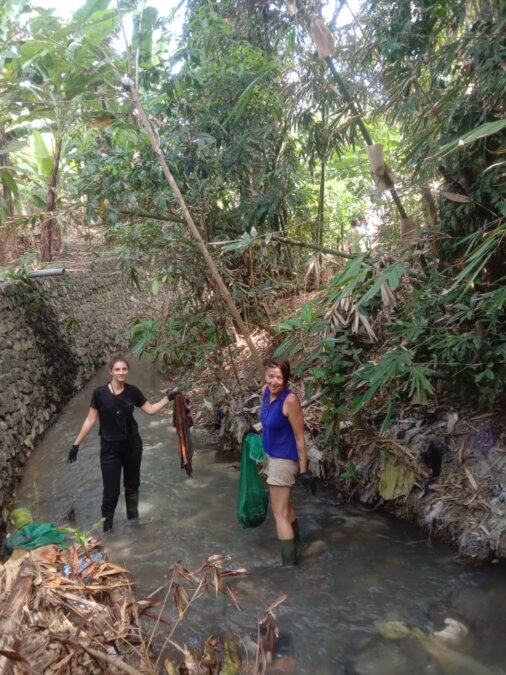
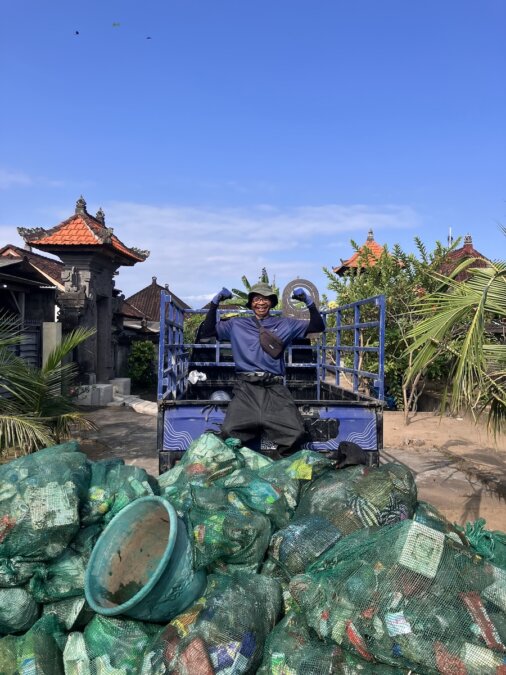
    Three other volunteers -from Italy, Japan, and France- and I joined the regular Sungai Watch crew behind a residential area. People had been throwing household waste into the river: bags of daily rubbish, clothes, mattresses, tiles, cement bags, and construction debris. Along the riverbank, we found burned waste and the remains of daily offerings, including sweet wrappers.

    By the time we arrived at around 8:00 a.m., the regular crew was already working. We continued until about noon, then weighed what we had collected: 410 kg of rubbish.

    The number was shocking, but what stayed with me was how little visual difference four hours of work made. The crew returns every Friday, yet waste continues to appear in the river faster than it can be removed. One clean-up cannot solve a problem that begins upstream, at household level, and within broader systems for collection, disposal, education, and enforcement.

    Bali does have policies aimed at reducing plastic waste, including a provincial regulation on single-use plastics, but implementation and enforcement remain uneven. Illegal dumping and open burning are continuing challenges, which means community-led clean-ups are essential, but they cannot replace reliable waste collection and long-term public education.

    Volunteering with Sungai Watch was dirty, physically demanding, and at times frustrating. Still, it was one of the most meaningful things I did in Bali. It made me look beyond the beaches, surf breaks, cafés, villas and perfect sceneries you can see on instagram.

    Four hundred and ten kilograms later, the river looked only slightly different. But I did not.