Category: Indonesia

  • My Nursing Internship in Bali: Hemodialysis, Pulmonology and Traditional Medicine

    My Nursing Internship in Bali: Hemodialysis, Pulmonology and Traditional Medicine

    My nursing internship in Bali took place at the national hospital in Bangli. Dr. Agung, the head of the international medical student programme, also led the Traditional Medicine Department and the weekly water-purification ceremonies.
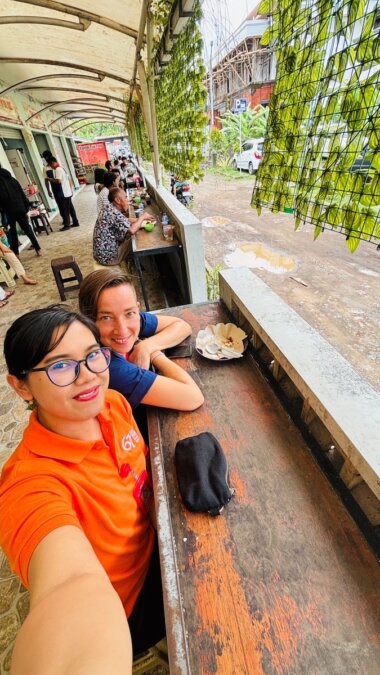
    Sarah Simone and Agung Ayu at the restaurant of national hospital Bangli

    At his side was the smiling and cheerful Agung Ayu. She welcomed us to the hospital each morning and made sure we found our way to our assigned departments.

    Choosing my hospital departments
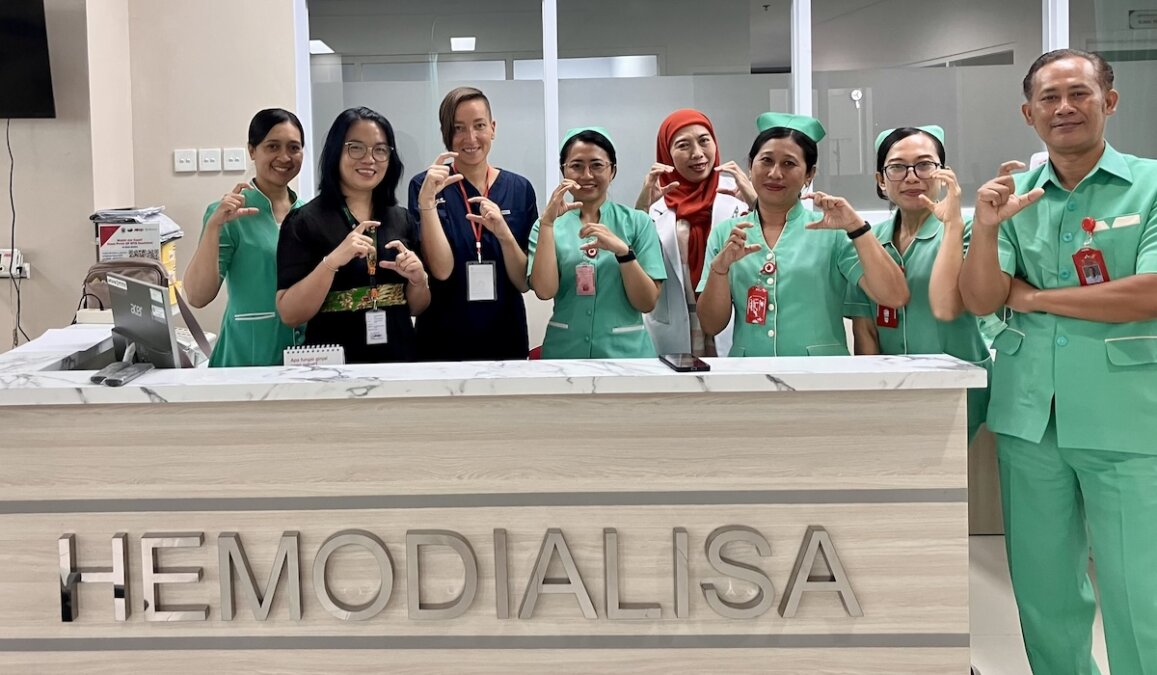
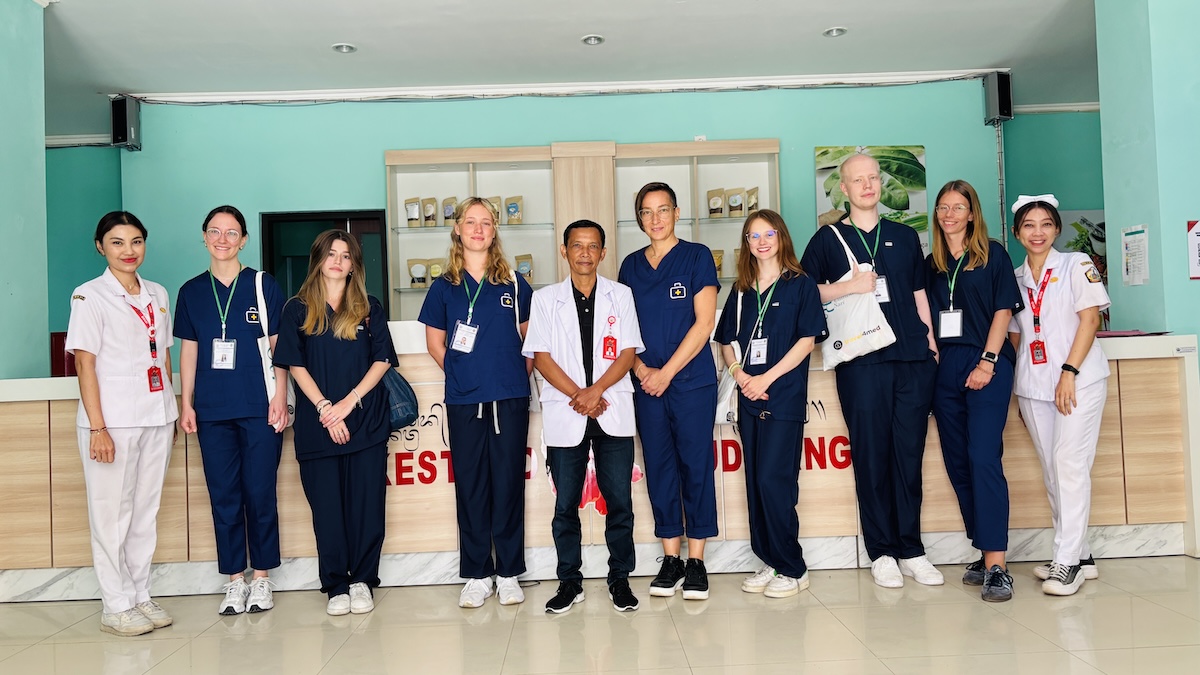
    Group picture with the team of the hemodialysis team at national hospital Bangli

    After observing surgery in Sri Lanka, I decided not to fight for a placement in the operating theatre. Instead, I chose to spend constructive time in the hemodialysis, Traditional Medicine and Pulmonology departments.

    The hemodialysis team was welcoming and knowledgeable. Not many of the staff spoke English, but we eventually found a way to communicate using a mixture of Balinese and Google Translate. The working day began at 7:30 a.m., with the first patients arriving at 8:00 for the first treatment round of the day. Five nurses prepared twelve dialysis stations while chatting and laughing at my attempts to ask questions in Balinese.

    Back at my home ward at Charité Universitätsmedizin, nurses had once been offered orientation rounds in the dialysis department as we treat many patients undergoing dialysis. However, as more nurses transferred there permanently, the orientation programme was discontinued. I therefore missed out on that training… I finally received it in Indonesia – and in Balinese, of all languages (laugh).

    As an international student, I was not allowed to set up a dialysis station or connect a patient to the machine. However, some patients knew a few English words and waved me over to their beds to converse with me and keep them company during their treatment. We talked about my home countries, places worth visiting in Bali and which foods I should try.

    Patients came for hemodialysis twice a week. They rotated between Monday to Friday appointments, with treatment sessions in the morning and afternoon. I gradually got to know some of them. Eventually, we ran into each other in the hospital restaurant and even during private excursions. I felt at home. I felt that I belonged.

    Learning in the Pulmonology Department

    Pulmonology was a teaching department. During morning lectures, local medical students presented common diseases through real patient cases, discussing diagnostic tests and treatment plans for each case.

    On other days, consultations took place with patients from the countryside surrounding Bangli. They arrived with a variety of respiratory complaints. These consultations were followed by hospital rounds, during which we mainly saw patients being treated for chronic obstructive pulmonary disease (COPD), often related to inhalation of smoke from fires, and pneumonia. The patient rooms were enormous because relatives gathered around their seriously ill family members to keep them company during their hospital stay. Many relatives had brought clothes and food to support the entire family.

    Behind the Pulmonology Department was an isolated tuberculosis ward with a separate entrance at the back of the building. There were no patients with active tuberculosis at the time, although five tuberculosis cases were being observed and followed up in Bangli. The ward was open to the outside and did not have negative-pressure rooms. Two rooms separated the patients from the rest of the hospital. Personal protective equipment mainly consisted of N95 masks, and patients were provided with a basic PPE kit.

    A spiritual experience in Traditional Medicine
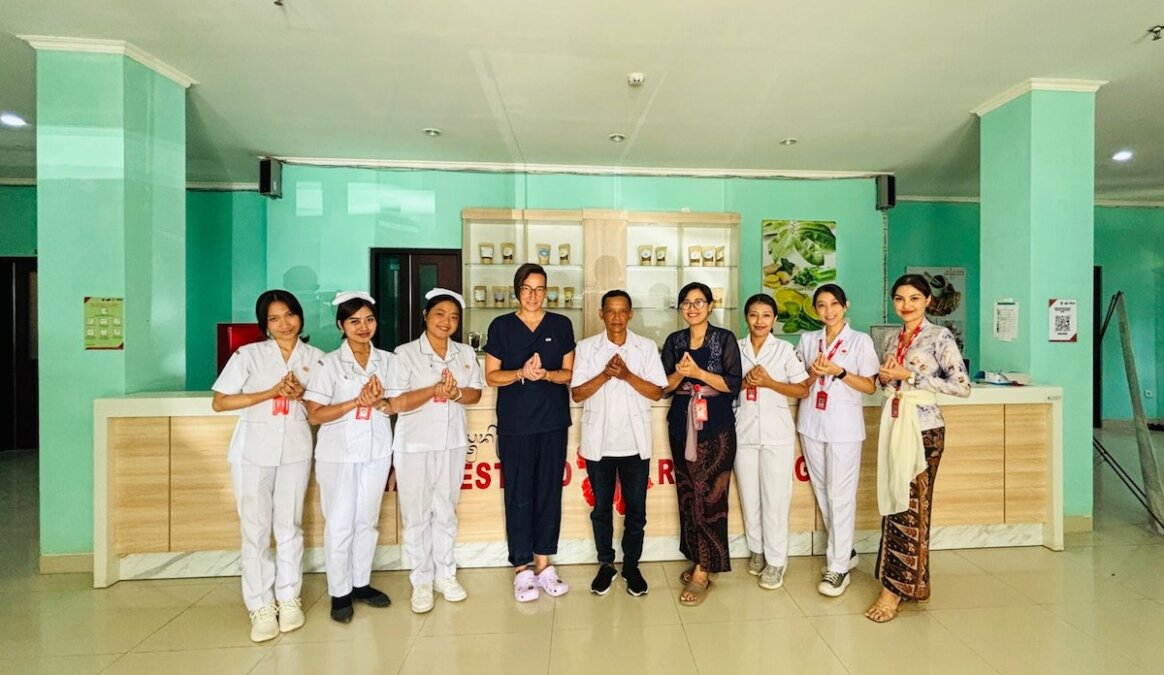
    Group picture with Dr. Agung and the team of the traditional medicine department and national hospital Bangli

    Traditional Medicine, led by Dr. Agung, was a spiritual place. One side of the department focused on acupressure and meditation, while the other offered wellness treatments.

    The building was filled with the fragrance of frangipani, which was burned throughout the day as part of offerings and meditation rituals. In some areas, the sounds of the rainforest and birds singing in the trees filled the rooms. My days included meditations, such as one for opening the heart, led by Dr. Agung. He chanted, hummed and played the conch shell. The meditation was followed by an acupressure treatment or a facial wellness treatment.
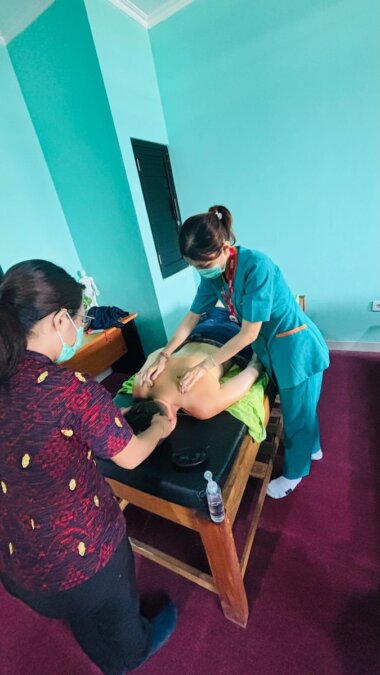
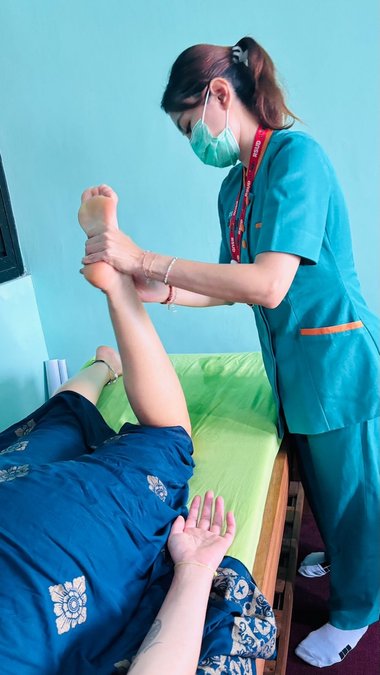
    If I believed in heaven, this is what I would imagine it to be like.

    I learned about the different chakras and their influence on, and connection to, our spirits and the gods. Dr. Agung enjoyed teaching me because he thought I was an atheist and considered me very receptive to his teachings and meditation rituals. Well, I had the best power naps of my life during my final week in Traditional Medicine.

    I felt very good about myself. I felt calm, inside and out. And I still do.
  • My First Hash Run with Bali Hash House Harriers 2

    My First Hash Run with Bali Hash House Harriers 2

    I’m sitting on the floor of my very amazing bathroom, journaling…
    This is exactly how I want my future bathroom to be: adjoining the bedroom, half‑roofed, with the bathtub under the roof and an open‑air shower under the sky. A little zen garden. A big mirror.

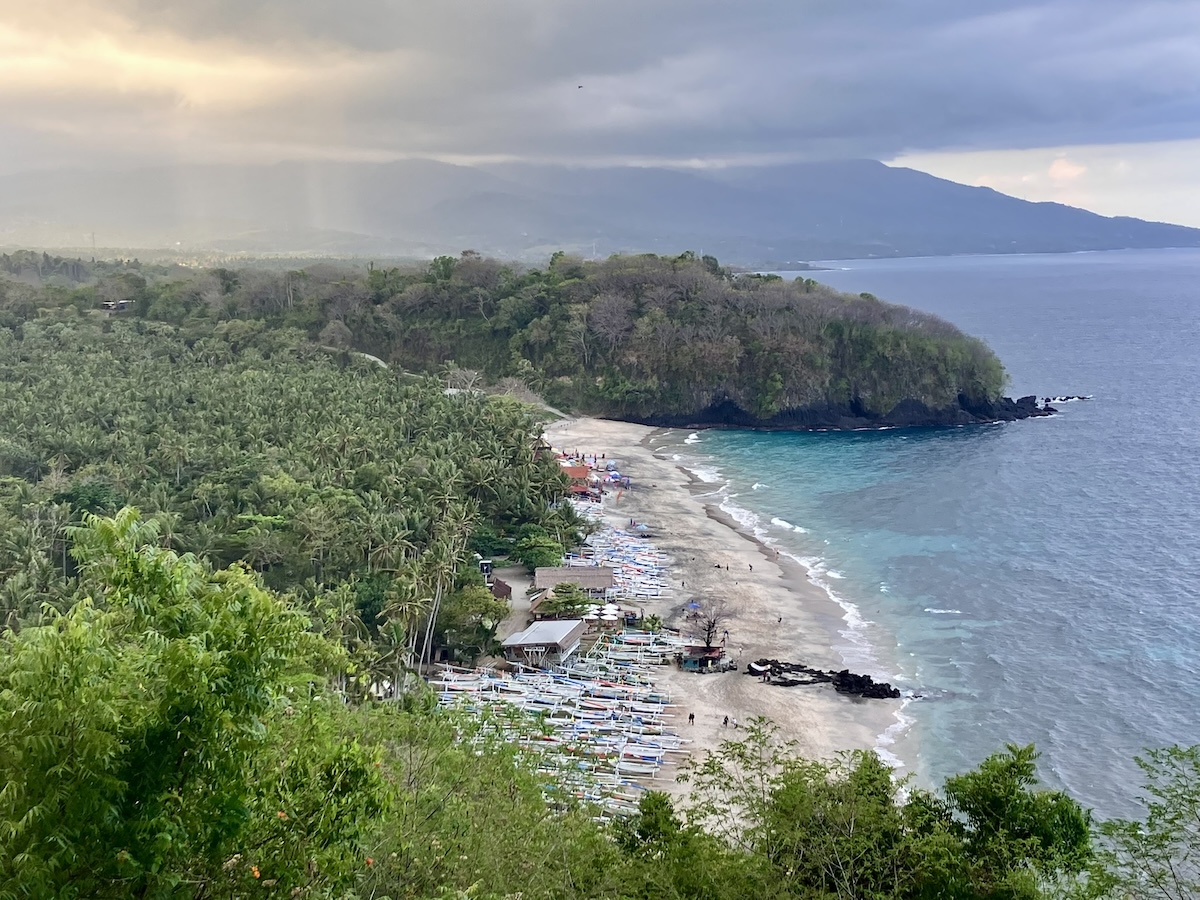
    I’m in Virgina Beach, northeast of Bali, on my first night in a private bungalow after leaving Europe for good. No roommates. No medical students. Just a remote village with very few international people — those who settled here decades ago and blend in beautifully.

    Jan -my new private driver- drove me here after showing me the campsite for tomorrow’s hash run. It was my first time riding on a scooter with both legs on one side, the way locals do when they’re wearing a sarong. He’s teaching me little words in Balinese and suggested I visit Gili Trawangan, which is already on my travel plan for next month.

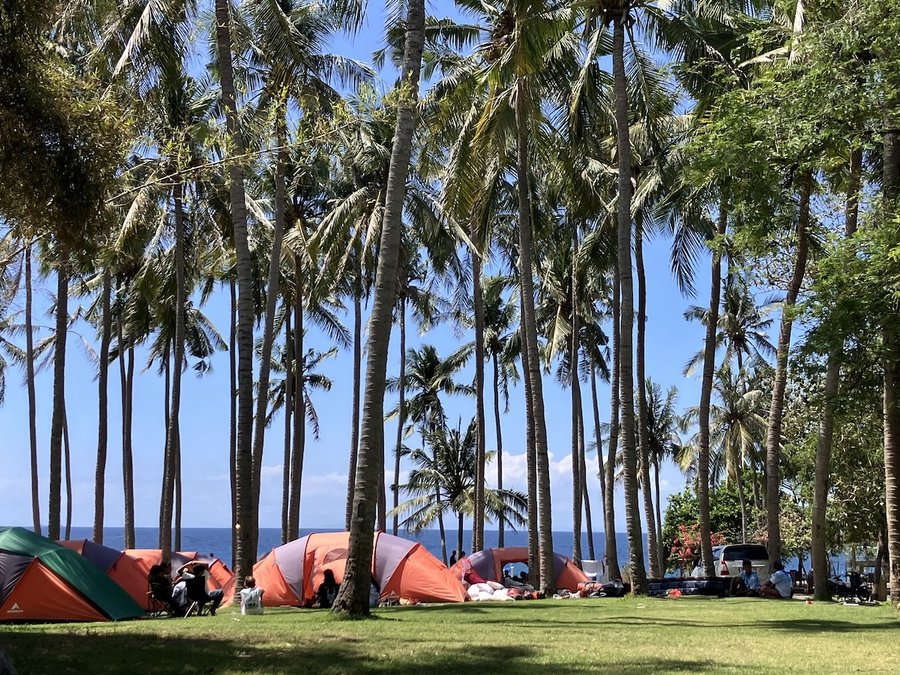
    Camping site behind virgin beach
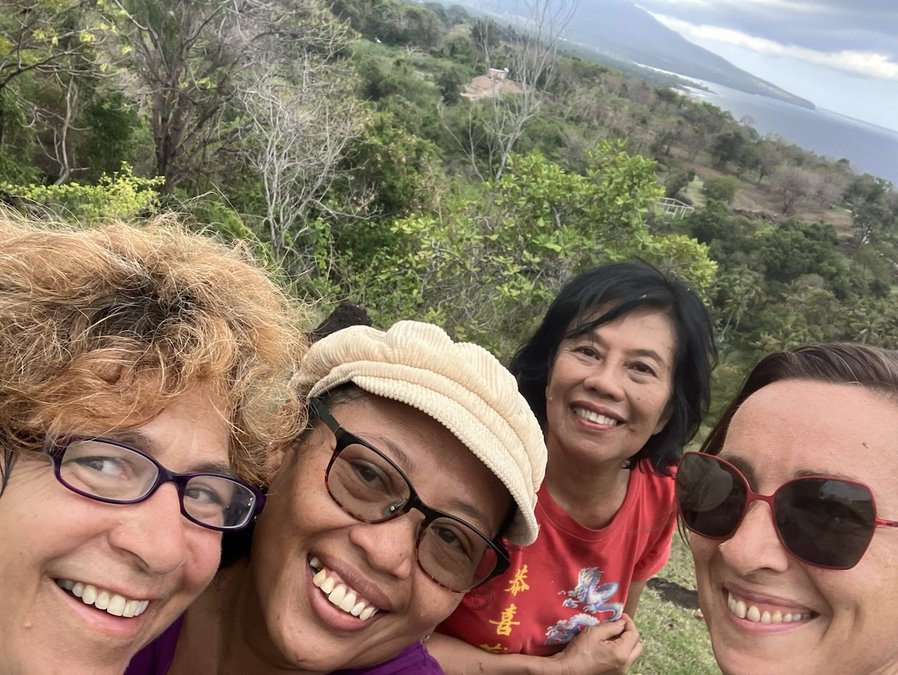
    Four ladies on the hill behind virgin beach in Bali

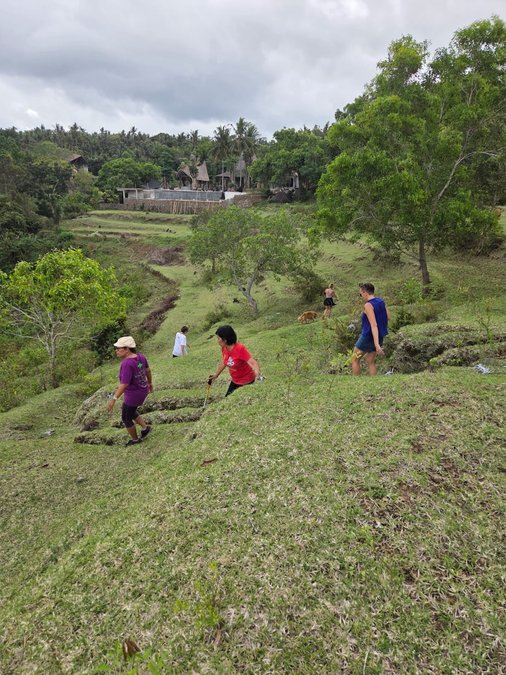
    My “mother hash” is Bali Hash House Harriers 2. Our “feel good manager” Dewi, is a member of this non‑competitive social running club. Her husband is the hare -he sets the trail in advance using paper marks. Participants either walk or run the route. I joined Dewi’s group of hashers, and we decided to leave early (not warming up with drinks) and walk the long trail.

    Hashing started in 1938 in Kuala Lumpur, when British expats ran to “hash out” their weekend hangovers. Today there are hundreds of local “hash houses” around the world, including Bali Hash House Harriers 2, which describes itself as part of this global, loosely affiliated network of social running clubs.

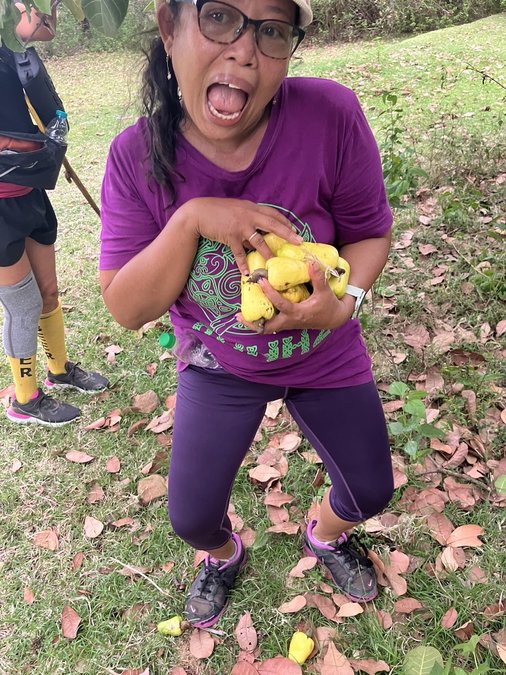
    It was a wonderful way to spend a Sunday afternoon: collecting cashew fruits, meeting people from all over the word, enjoying nature, and sharing different foods that each and everyone brought. After the feast, I was officially adopted into the hashing world by my own baptism.

    The highlight came at the end: Burning Worm – Release the Kraken. A huge, handmade Kraken had been built especially for the occasion. Watching it burn in the dark felt dramatic, communal, and slightly wild -exactly the kind of memory that makes a first hash run unforgettable.

  • 410 kg of Trash: My River Clean-Up with Sungai Watch In Bali

    410 kg of Trash: My River Clean-Up with Sungai Watch In Bali

    I came across this NGO in my Lonely Planet: Sungai Watch. The organisation works to stop plastic and other waste from reaching Indonesia’s oceans by cleaning rivers, installing waste barriers, and involving local communities in the process. Volunteers can sign up for clean-ups at different locations, usually for around four hours. I decided to join one on a Friday morning.

    The meeting points are often shared as Google Maps coordinates, because the clean-ups take place far from Bali’s polished tourist scenery — often behind residential areas, along riverbanks, and near illegal dumping sites. Sungai Watch has run weekly volunteer clean-ups since 2022, alongside its river-barrier and waste-sorting work.

    I am staying near Keramas Beach on Bali’s east coast, not far from Casa De Brillo (= home). Here, the beach is all black sand and a powerful left reef break, with local surfers flying through the air. But the river we were cleaning that day eventually flows into the ocean. I was curious to see this less visible side of Bali and to learn more about the island’s waste-management challenges.

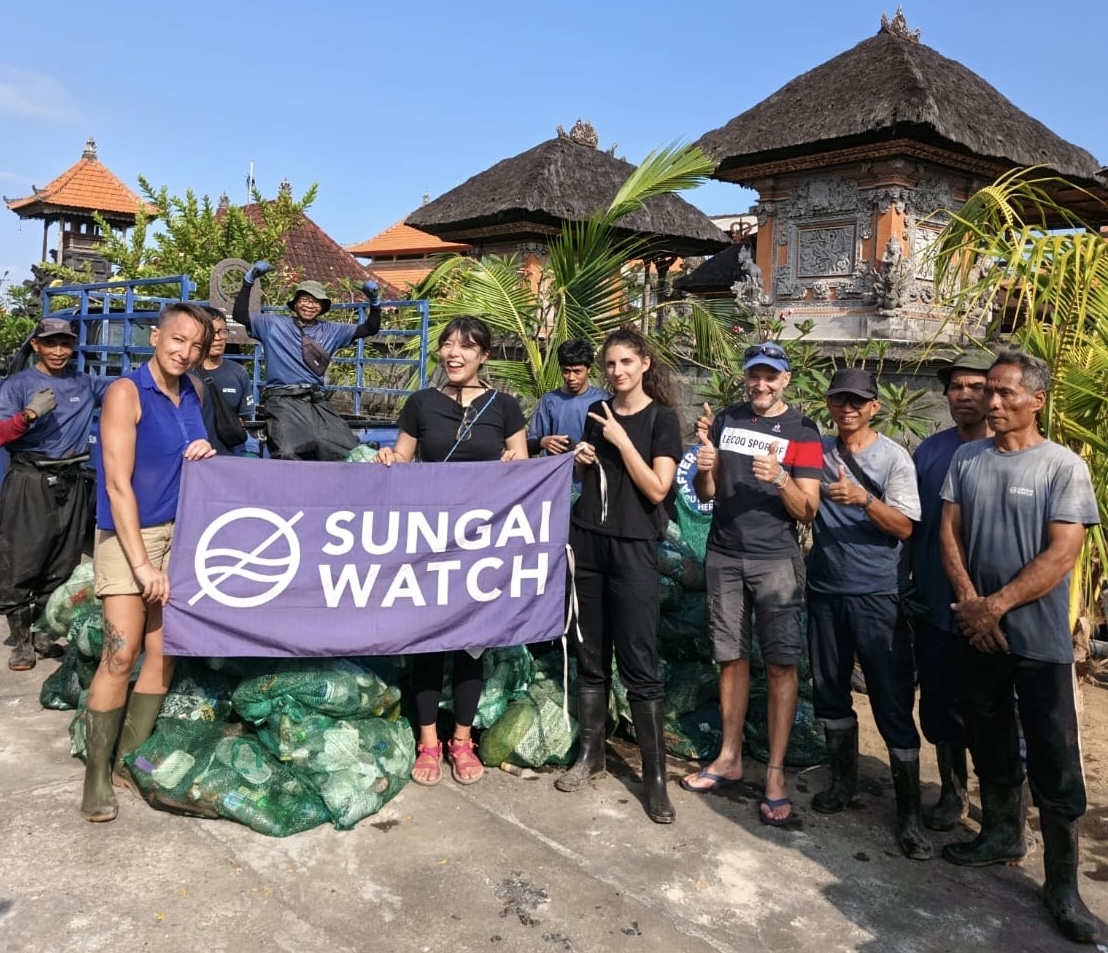
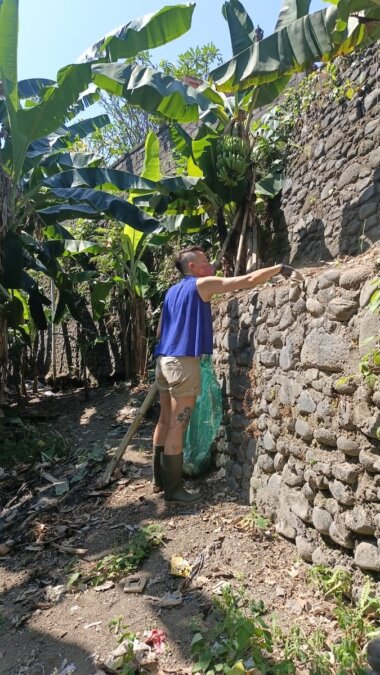
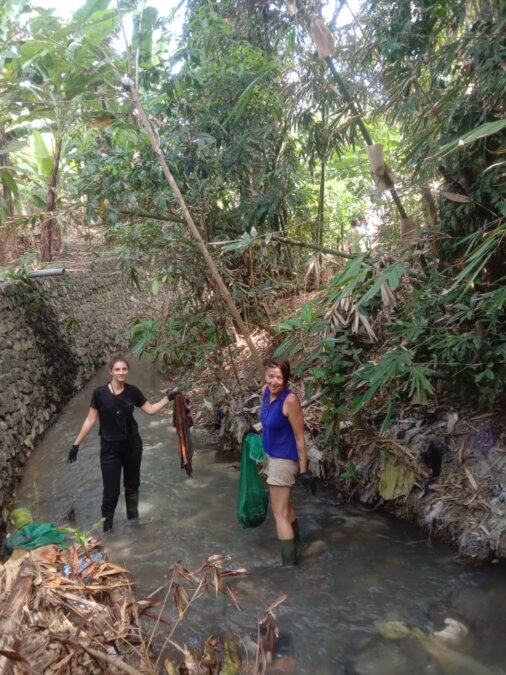
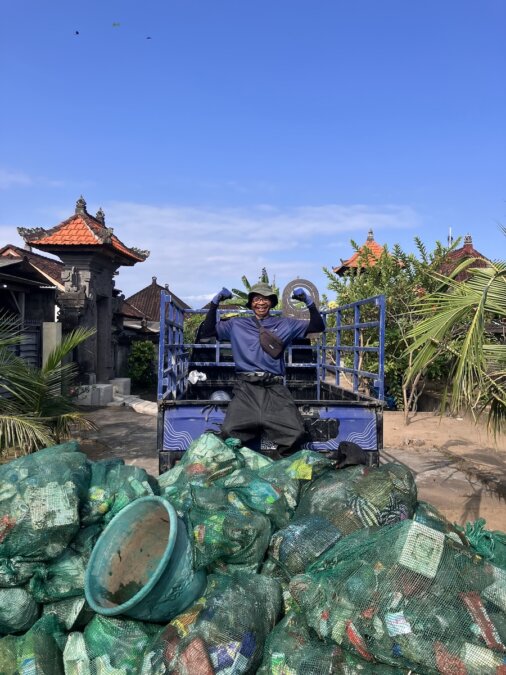
    Three other volunteers -from Italy, Japan, and France- and I joined the regular Sungai Watch crew behind a residential area. People had been throwing household waste into the river: bags of daily rubbish, clothes, mattresses, tiles, cement bags, and construction debris. Along the riverbank, we found burned waste and the remains of daily offerings, including sweet wrappers.

    By the time we arrived at around 8:00 a.m., the regular crew was already working. We continued until about noon, then weighed what we had collected: 410 kg of rubbish.

    The number was shocking, but what stayed with me was how little visual difference four hours of work made. The crew returns every Friday, yet waste continues to appear in the river faster than it can be removed. One clean-up cannot solve a problem that begins upstream, at household level, and within broader systems for collection, disposal, education, and enforcement.

    Bali does have policies aimed at reducing plastic waste, including a provincial regulation on single-use plastics, but implementation and enforcement remain uneven. Illegal dumping and open burning are continuing challenges, which means community-led clean-ups are essential, but they cannot replace reliable waste collection and long-term public education.

    Volunteering with Sungai Watch was dirty, physically demanding, and at times frustrating. Still, it was one of the most meaningful things I did in Bali. It made me look beyond the beaches, surf breaks, cafés, villas and perfect sceneries you can see on instagram.

    Four hundred and ten kilograms later, the river looked only slightly different. But I did not.

  • Finding Balance at Pura Taman Pecampuhan Sala – Water Purification Ceremony in Bangli

    Finding Balance at Pura Taman Pecampuhan Sala – Water Purification Ceremony in Bangli

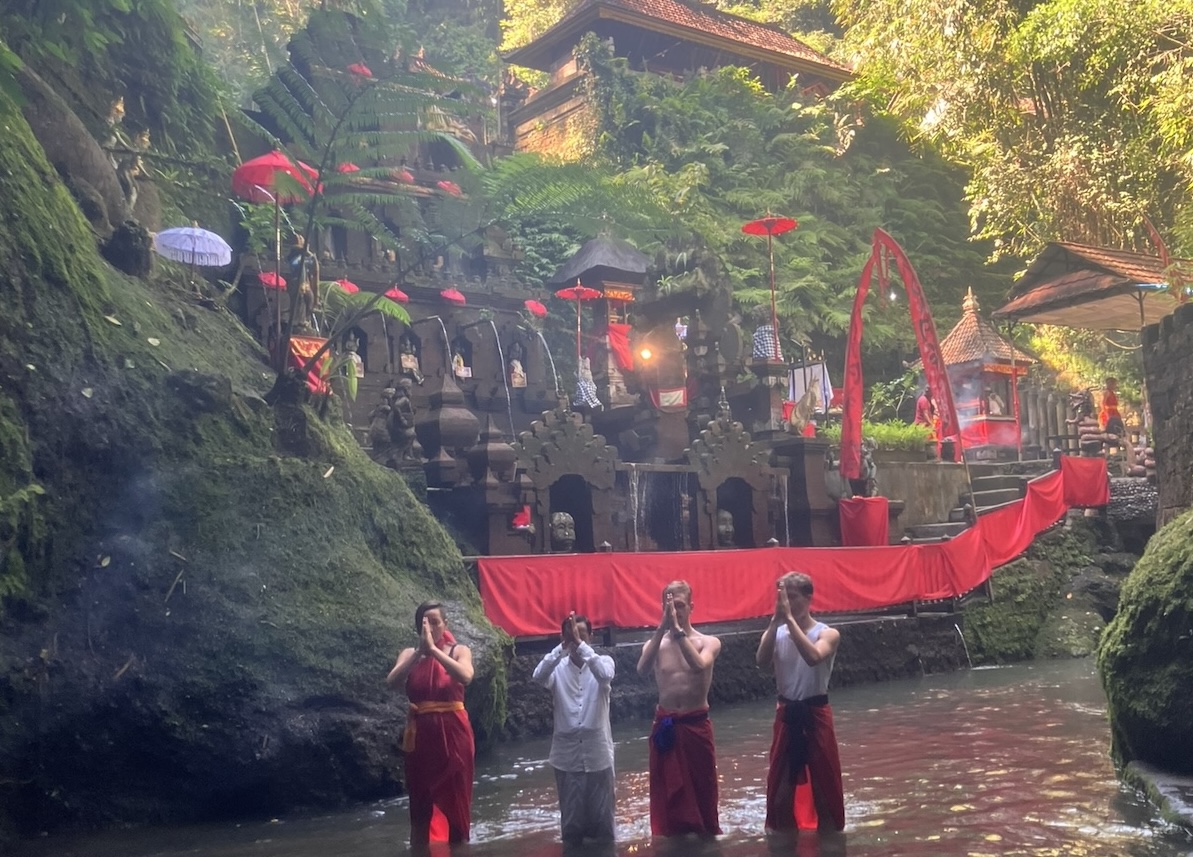
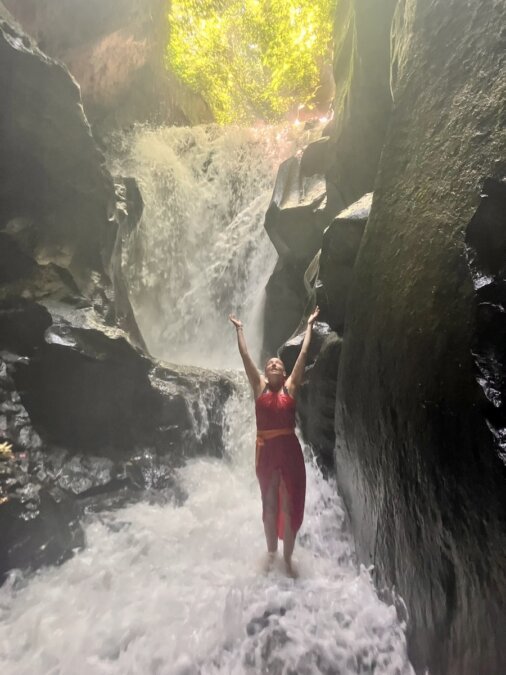
    A water purification ceremony is a spiritual cleansing ritual, recommended when you’re feeling stressed or exhausted — and at least every six months if you can. This week, ours took place at Pura Taman Pecampuhan Sala, a hidden jungle temple in Bangli where two rivers meet and nine sacred fountains feed the holy spring water.

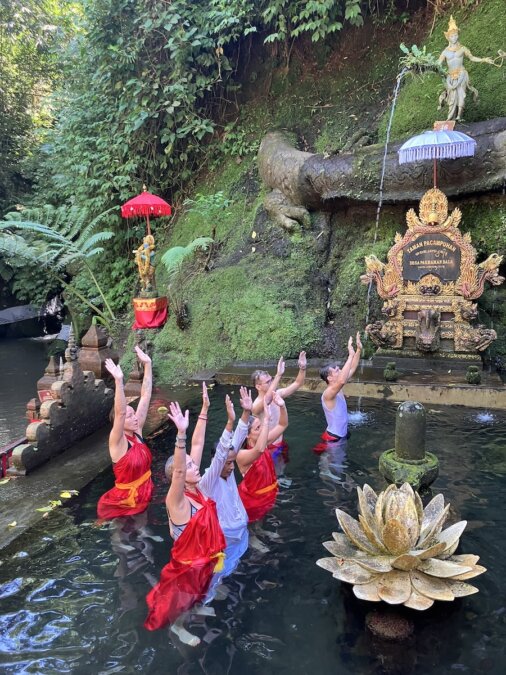
    Dr. Agung, head of Traditional Medicine at Bangli National Hospital, led our melukat ceremony with calm authority and deep respect for the tradition. We began with a few simple but important meditative basics: forming a lotus flower with our hands, the right hand leading as a constant reminder to do the “right thing” along with the gesture to cleanse your head, face and heart three times with water. Our group was small, sharing the purification site with a handful of tourists who had come to witness and join the ceremony.

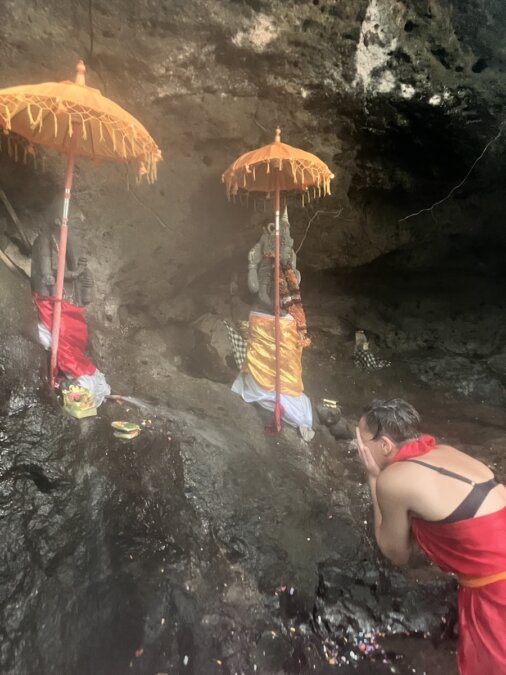
    Together, we moved through around 21 offerings to the gods -greeting Mother Earth, praying to the god of the sky and to the spirit of the water where the two springs converge- while wandering through the holy spring water, letting it wash over us as if it were pulling away negative energy and restoring an inner balance I hadn’t realised I’d lost.

    In Balinese Hindu belief, the melukat ritual at Taman Pecampuhan Sala uses sacred water to cleanse body, mind, and spirit of negativity and spiritual heaviness. Standing under the flowing springs in this quiet ravine, I felt the weight of recent weeks soften, replaced by a quiet steadiness that stayed with me long after I changed out of my wet sarong.

  • Cremation Ceremony of a Member of the Royal Family – Ubud, Bali

    Cremation Ceremony of a Member of the Royal Family – Ubud, Bali

    Preparations for the cremation ceremony had already begun before I arrived in Ubud, Bali. Our “Feel Good Manager” from travel4med told me it was a rare public event to witness and not to be missed. The grand royal cremation ceremony -known locally as Pelebon– is held in honour of a deceased member of the Ubud royal family. It is a vibrant, deeply spiritual procession featuring a traditional multi‑tiered cremation tower.

    The different parts of the tower are spread out and built around Ubud’s main square, then carried on the shoulders of hundreds of men in traditional Balinese costumes. The colours of the cremation -purple and gold- feature prominently on two large pieces:

    • Bade (cremation tower): Represents the sacred Mount Meru and acts as a symbolic ladder connecting the human and the divine to transport the body.
    • Lembu (sarcophagus): Shaped like a sacred bull, it receives the body before it is purified through fire.

    I found a perfect viewing spot on the first floor of a restaurant opposite the cremation site and watched the procession. The Bade and Lembu sarcophagus were carried from the palace to the cremation grounds, continuously accompanied by Gamelan orchestras, drums, and cymbals.

    I eventually made my way down to the cremation grounds, where I bought my first sarong and settled into a shaded spot. From there, I joined other onlookers in witnessing the final preparations and the burning of the sarcophagus.