I’m happy to share that I’ve taken another step forward: I’ve been invited to sit the OSCE.
This is the final examination on my path to becoming a registered nurse in New Zealand, and I’m really excited about it. Nervous, of course – but this is very different from the practical examination I passed in Germany in 2022: one setting, one patient, in a neurological ICU.
What the OSCE involves
The OSCE consists of 10 simulation stations. Each station lasts 12 minutes in total: 2 minutes to read and prepare, 8 minutes to complete the scenario, and 2 minutes to move to the next station. The stations are:
Mental health assessment.
Physiological assessment.
Specific physiological assessment.
Professional responsibility.
Emergency management.
Clinical skills.
Medication administration.
Communication and teamwork.
Planning nursing care.
Managing the deteriorating patient.
For me, the best preparation is working on a hospital ward. That is one of the reasons I have extended my current service aboard the Africa Mercy in Madagascar.
I’m also practising the different stations with Kiwi Nurse Academy. This is helping me understand high-scoring approaches, avoid common mistakes, and prepare for New Zealand’s expectations around cultural safety, Te Tiriti o Waitangi -the Treaty of Waitangi- communication, and patient rights.
Cultural safety is an important part of nursing practice in Aotearoa New Zealand. The Nursing Council’s updated 2026 guidance places particular emphasis on relationships, power-sharing, accountability, reflective practice, and addressing bias and structural inequities in healthcare.
Why New Zealand?
Some of you may wonder why I chose New Zealand over Australia (for now).
First, I turned 45 in June, which affected my migration options for Australia. Second, the cost of sitting the exam in Australia is exorbitant, with preparation courses costing roughly the same as the examination – around AU$4,000 each.
Some people argue that the price difference between the two countries reflects the difference in income. But I’m not in for the money but rather for peace and quiet.
I’m volunteer as a ward nurse (pediatric ICU) caring for patients after maxillofacial surgery on the Africa Mercy in Madagascar. For me, nursing is more than a job – as colleagues at Charité would joke, I’m not in it for the money. It’s a calling to stand with children and families when they need hope, care, and a chance to heal. I’ll be offering my time, skills, and heart to provide follow-up care and nursing support where local resources are limited.
Mission from 12 July 2026 to 12 September 2026 (preliminary end date)
What Mercy Ships Does
Mercy Ships partners with host countries to bring free, life-changing surgeries, dental care, and medical training to people who would otherwise have little or no access to safe healthcare. In Madagascar, the Africa Mercy is serving patients in Toamasina, with thousands of free surgeries and dental procedures planned, alongside training for local healthcare professionals to strengthen long-term surgical and nursing care. As a pediatric nurse, I’m honored to be part of a mission that combines immediate healing with long-term impact.
How You Can Help
I’m asking for your help to cover my volunteer expenses. Any contribution helps. To give you an idea of what donations can cover, here are some of my costs:
TB skin test: 20 US$
Diphtheria and tetanus vaccine: 28 US$
Malaria prophylaxis medication, required from 2 days before travel to Africa until 4 weeks after departure: 170 Malaysian Ringgit
New set of appropriate clothing, since I’ll be setting aside my “bikini kinda live” style for the next two months: 300 Malaysian Ringgit, 28US$
Entry visa: 35 US$
Monthly expenses for recreation
Expenses during time off
My application process started at the end of last year, and my first assignment could have begun in March 2026. However, progress in my Australian and New Zealand registration process allowed me to postpone my mission. That is why the costs are listed in different currencies, since I was preparing for service while in Cambodia and Malaysia.
I started my registration in New Zealand a little later than my AHPRA process. While preparing to leave Germany I sold most of my things – my speakers were bought by a friendly guy who lived and worked in New Zealand and suggested I register there because the process is easier and less expensive. Surf and nature didn’t hurt the argument either.
TruMerit verification and initial submission
The Nursing Council only accepts applications approved by TruMerit, an outsourced non-profit based in the USA. Their document-authentication process differs slightly from Australia’s. I submitted my TruMerit application in August 2025. Same as for Australia, they have never received bachelor nursing qualifications from Germany and after a quick review, they asked for further proof to be sent directly from the University Clinic of Cologne and the Cologne Department of Health.
Coordinating documents from abroad
In September 2025 I was in Indonesia and coordinated with both the Department of Health in Cologne and the ‘Institut für Pflegewissenschaft‘ at the University Clinic of Cologne to obtain the additional documentation TruMerit required: confirmation of my substantial nursing education and a valid license to practice. Both documents required my original signature and date, which I prepared in Southeast Asia and sent to my father, who coordinated the process for me in Germany.
The Department of Health quickly sent my licence confirmation directly to TruMerit by mail after having received the first page from my father. The university needed more time: they had to provide detailed study content with theoretical, clinical, and laboratory hours. Multiple departments and staff were involved, which slowed the process.
I tried to speed things up by arranging express FedEx from Cologne to the U.S., but that turned out to be a mistake. I learned I mustn’t be directly involved in the verification chain — my involvement would raise questions about the documents’ legitimacy. That meant re-signing and dating the first page and sending the original from Cambodia back to Germany. Fortunately the university was helpful; once they received my accompanying page they re-sent the completed, signed form by regular courier. My transcript of record was not included initially, so I requested it again; it arrived and was approved by mid-March 2026
Tracking down a delayed delivery
As my registration status hadn’t changed, I contacted the Department of Health to find out what happened to the documents. There was still a chance the mail hadn’t cleared customs for whatever strange reason, given the current political situation. My contact eventually confirmed the packet had been delivered back in December. I could hardly stop myself from calling and shouting down the phone, so I restrained and sent an email with the proof of delivery instead. By April I finally received the final report to be approved and submitted to the Nursing Council of New Zealand.
Registration and the IQN
I applied for Nursing Council registration, completed a foundation in cultural competency and the Ngā Paerewa Te Tiriti o Waitangi course, and in May I was invited to register with Pearson VUE to take the IQN (theoretical exam).
Money invested so far: € 890
The IQN is a computer-based multiple-choice test consisting of two parts: Part A — Medication Safety (12 questions in 30 minutes) and Part B — Nursing Knowledge (108 questions in 135 minutes). Unlike the NCLEX, the IQN questions are not adaptive; every candidate receives the same difficulty level.
I began my Australian Health Practitioner Regulation Agency (AHPRA) registration in March 2025 while living in Berlin and working at Charité Universitätsmedizin. The AHPRA website estimated up to six months for processing, so I figured I’d have everything sorted well before my 45th birthday in June 2026 (yes, that’s the cutoff for filing and migrating – not exactly subtle).
Eight months of waiting and a strange notary request
Eight months passed before AHPRA reviewed my documents. When they finally looked, they told me my documents lacked adequate authentication by a notary public. That felt odd -a German notary can hardly confirm the origin of every certificate ever produced in German- but AHPRA insisted, so I complied. My translation office found the request just as strange; we revised the order and wording of translated documents several times. Big shoutout to Mr Erichsen from Erichsen & Partner for juggling the original bachelor certificates between the notary, me, and AHPRA.
Uploading headaches and Stream B classification
After a few upload headaches in my online profile and back-and-forth with my AHPRA case officer in Australia, we finally collected all requested documents and made them compliant with the guidelines. Because a German Bachelor of Science in Clinical Nursing hasn’t been assessed before, I landed in Stream B – which means my qualification is relevant but not considered substantially equivalent to an approved Australian nursing qualification, or international nursing qualification for that matter. Transaltion: I’ll have to retake theoretical and practical nursing exams.
Money spent so far: €1,150
NCLEX‑RN: registration, format, and test day
On 22 April 2026 I got the go-ahead to register with Pearson VUE and booked the NCLEX-RN exam accordingly. The NCLEX uses computer-adaptive-testing: each question adjusts in difficulty based on your previous answer. You’ll answer between 85 and 150 questions in up to 3 hours. The challenge is to remain above the passing standard. Topics cover physiological adaptation, safety & infection control, pharmacology, psychosocial integrity with areas either not covered in the German nursing curriculum or not in such details as internationally required. ever covered in German nursing education or not in enough depths to be internationally qualified. I have been studying since April.
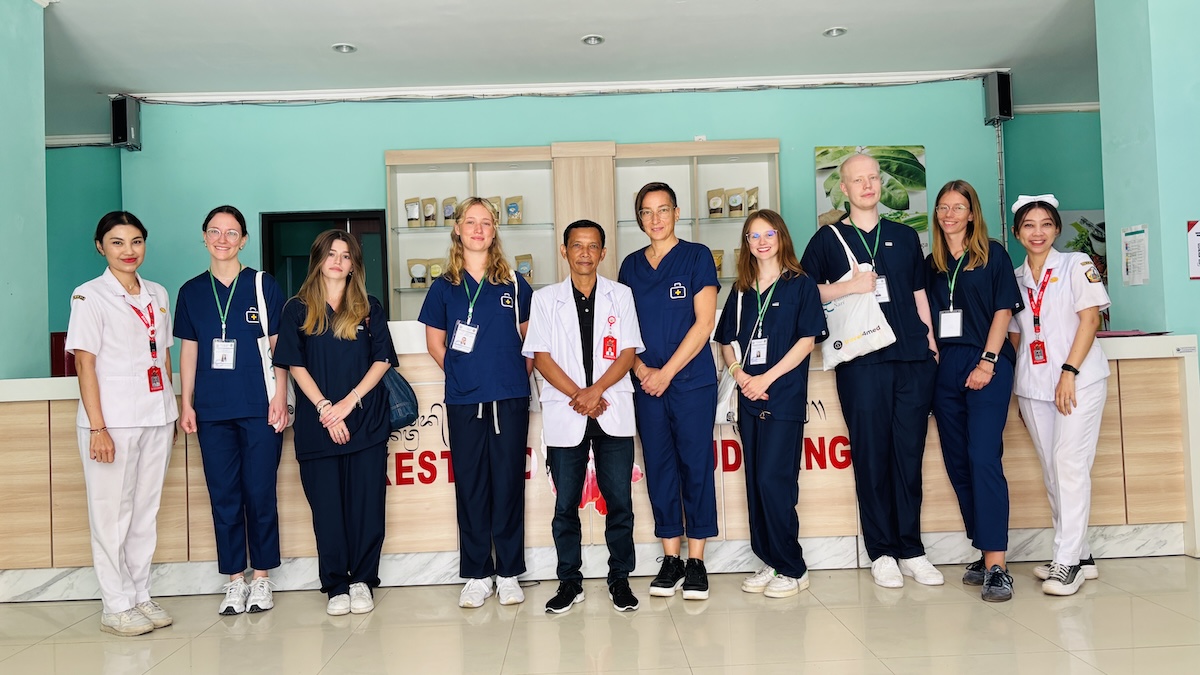
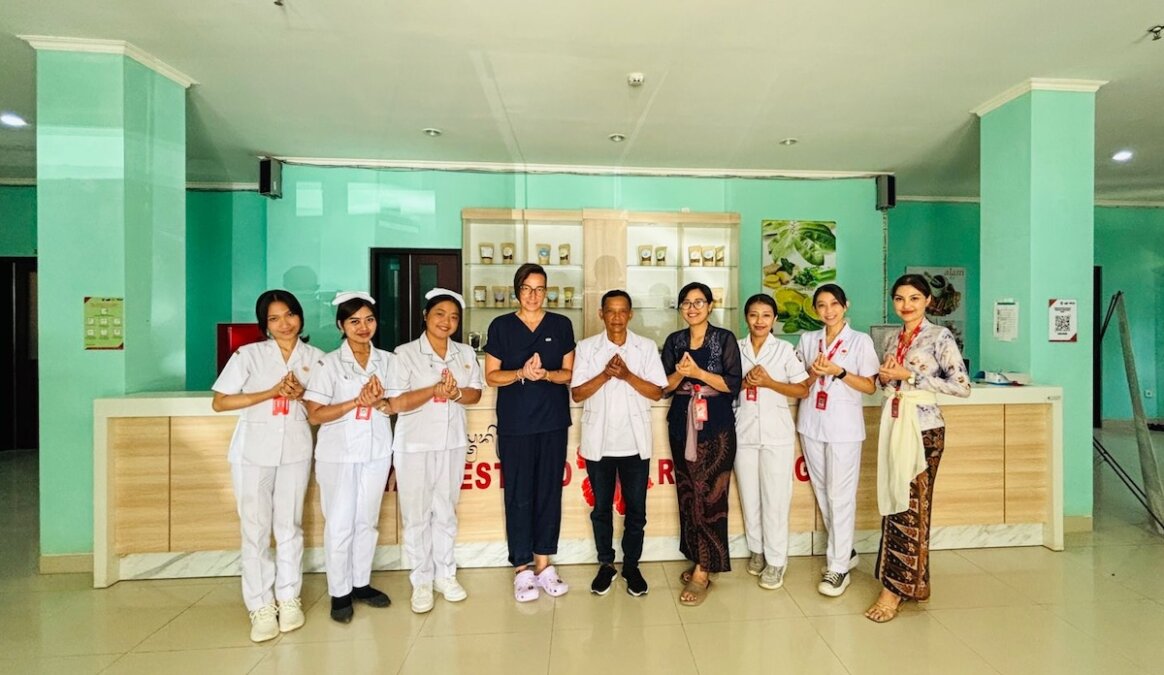
My nursing internship in Bali took place at the national hospital in Bangli. Dr. Agung, the head of the international medical student programme, also led the Traditional Medicine Department and the weekly water-purification ceremonies.
At his side was the smiling and cheerful Agung Ayu. She welcomed us to the hospital each morning and made sure we found our way to our assigned departments.
Choosing my hospital departments
After observing surgery in Sri Lanka, I decided not to fight for a placement in the operating theatre. Instead, I chose to spend constructive time in the hemodialysis, Traditional Medicine and Pulmonology departments.
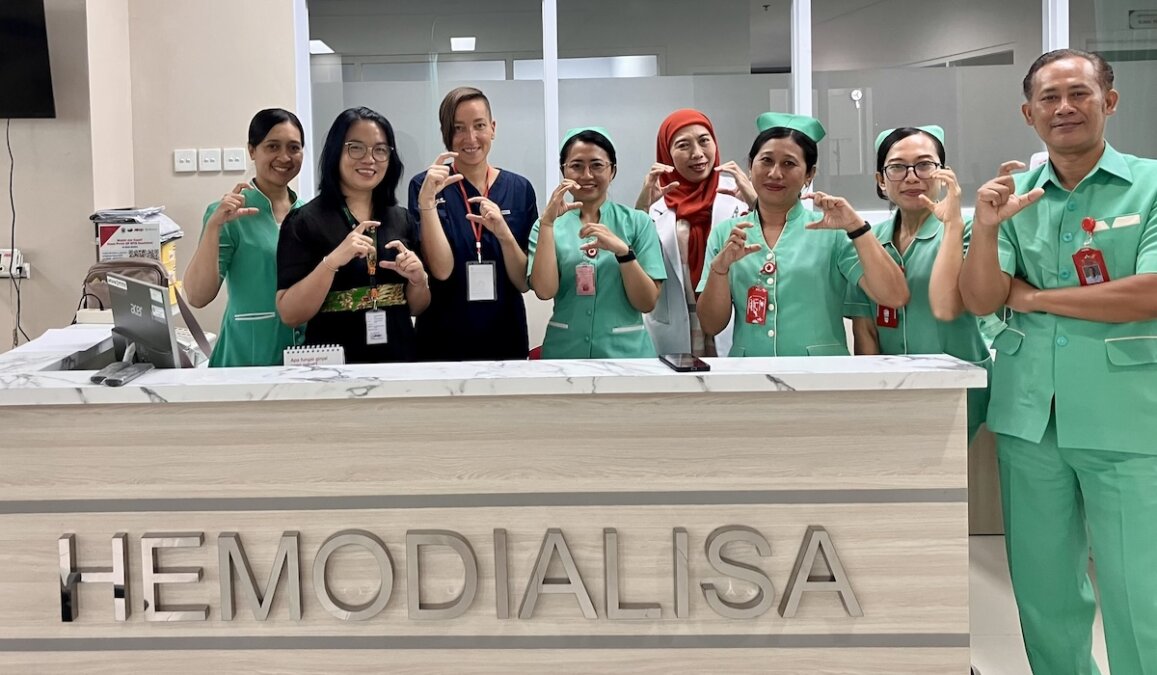
The hemodialysis team was welcoming and knowledgeable. Not many of the staff spoke English, but we eventually found a way to communicate using a mixture of Balinese and Google Translate. The working day began at 7:30 a.m., with the first patients arriving at 8:00 for the first treatment round of the day. Five nurses prepared twelve dialysis stations while chatting and laughing at my attempts to ask questions in Balinese.
Back at my home ward at Charité Universitätsmedizin, nurses had once been offered orientation rounds in the dialysis department as we treat many patients undergoing dialysis. However, as more nurses transferred there permanently, the orientation programme was discontinued. I therefore missed out on that training… I finally received it in Indonesia – and in Balinese, of all languages (laugh).
As an international student, I was not allowed to set up a dialysis station or connect a patient to the machine. However, some patients knew a few English words and waved me over to their beds to converse with me and keep them company during their treatment. We talked about my home countries, places worth visiting in Bali and which foods I should try.
Patients came for hemodialysis twice a week. They rotated between Monday to Friday appointments, with treatment sessions in the morning and afternoon. I gradually got to know some of them. Eventually, we ran into each other in the hospital restaurant and even during private excursions. I felt at home. I felt that I belonged.
Learning in the Pulmonology Department
Pulmonology was a teaching department. During morning lectures, local medical students presented common diseases through real patient cases, discussing diagnostic tests and treatment plans for each case.
On other days, consultations took place with patients from the countryside surrounding Bangli. They arrived with a variety of respiratory complaints. These consultations were followed by hospital rounds, during which we mainly saw patients being treated for chronic obstructive pulmonary disease (COPD), often related to inhalation of smoke from fires, and pneumonia. The patient rooms were enormous because relatives gathered around their seriously ill family members to keep them company during their hospital stay. Many relatives had brought clothes and food to support the entire family.
Behind the Pulmonology Department was an isolated tuberculosis ward with a separate entrance at the back of the building. There were no patients with active tuberculosis at the time, although five tuberculosis cases were being observed and followed up in Bangli. The ward was open to the outside and did not have negative-pressure rooms. Two rooms separated the patients from the rest of the hospital. Personal protective equipment mainly consisted of N95 masks, and patients were provided with a basic PPE kit.
A spiritual experience in Traditional Medicine
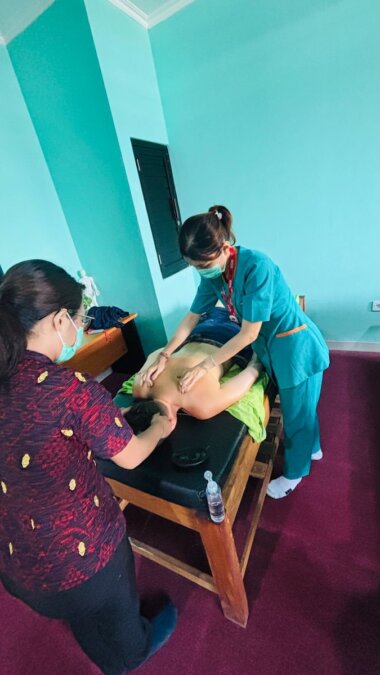
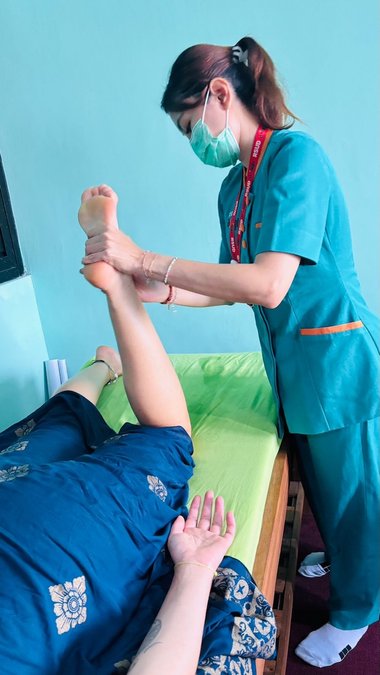
Traditional Medicine, led by Dr. Agung, was a spiritual place. One side of the department focused on acupressure and meditation, while the other offered wellness treatments.
The building was filled with the fragrance of frangipani, which was burned throughout the day as part of offerings and meditation rituals. In some areas, the sounds of the rainforest and birds singing in the trees filled the rooms. My days included meditations, such as one for opening the heart, led by Dr. Agung. He chanted, hummed and played the conch shell. The meditation was followed by an acupressure treatment or a facial wellness treatment.
If I believed in heaven, this is what I would imagine it to be like.
I learned about the different chakras and their influence on, and connection to, our spirits and the gods. Dr. Agung enjoyed teaching me because he thought I was an atheist and considered me very receptive to his teachings and meditation rituals. Well, I had the best power naps of my life during my final week in Traditional Medicine.
I felt very good about myself. I felt calm, inside and out. And I still do.
It’s my last week in Sri Lanka and the local travel4med team has arranged visits to the maternity clinic. Maternity was on most students’ bucket list, but as cesarean births and labour can’t be scheduled, some spoiled students got really upset and did not follow through with their assignments. However, us regular students still had a great time learning and observing in a smaller, more intentional group.
Assigned to the gynaecology ward, we followed the gynaecology god (we lovingly called him “Elvis” because of his swinging gait, full black hair and sunglasses he was wearing during rounds) and he started to notice us on the second day. We made it our goal to stay in his visual field during morning rounds – quick on our feet as he moved from one patient to the next, flipping through charts and performing routine exams. It eventually paid off: after rounds he invited us to follow him to the surgical ward. Here too, students had full access to patients’ medical records and imaging, and questions were welcome and expected:
The first client diagnosed with PID underwent a laparotomy for abdominal examination. Most women on the ward that morning were being treated for PID. Pelvic Inflammatory Disease is a severe complication of sexually transmitted infections (commonly chlamydia or gonorrhea) and affects women. Luckily, Elvis did not find any pelvic abscesses or severe scarring and tubal blockage in this patient.
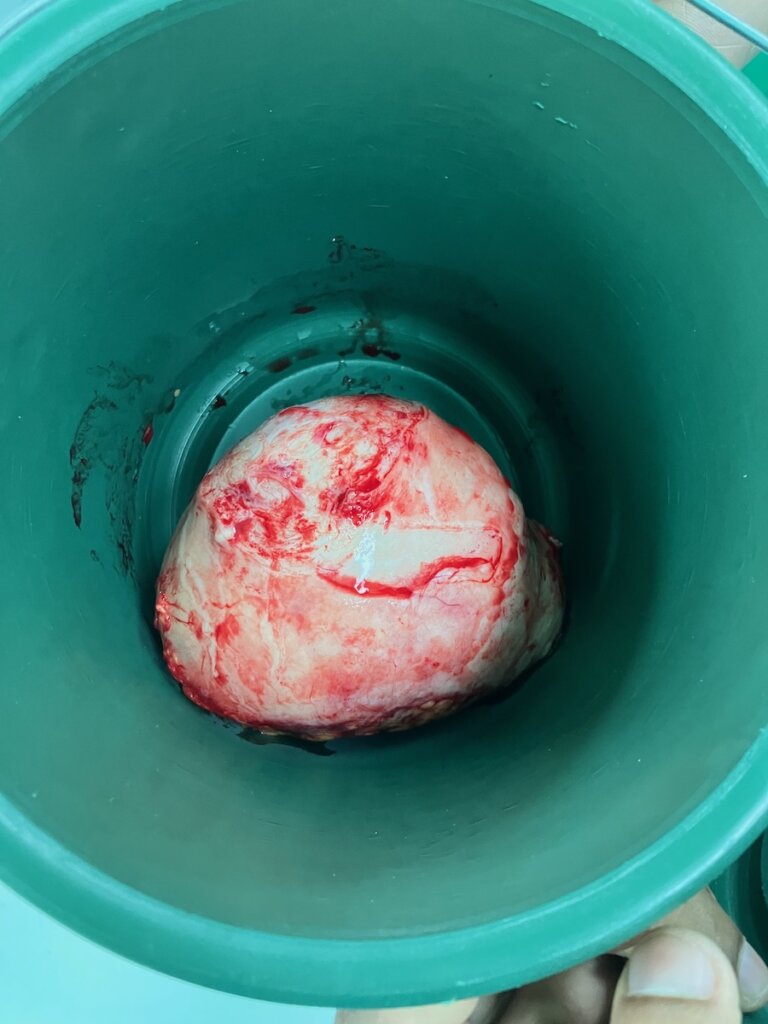
Another client -a 32‑year‑old woman- underwent surgery to remove a 7 x 5 cm mass from her uterus. Well, these were the measures from her chart… As you can see, it is much bigger!
I kept the picture uncut so you can get a better idea of the real size with the thumb on the bottem right of the picture.
I finished my last shift of medical training in Sri Lanka with an elective caesarean birth and joined the midwives for the newborn examination. Both mother and newborn are well – a beautiful end to my surgery observations.